

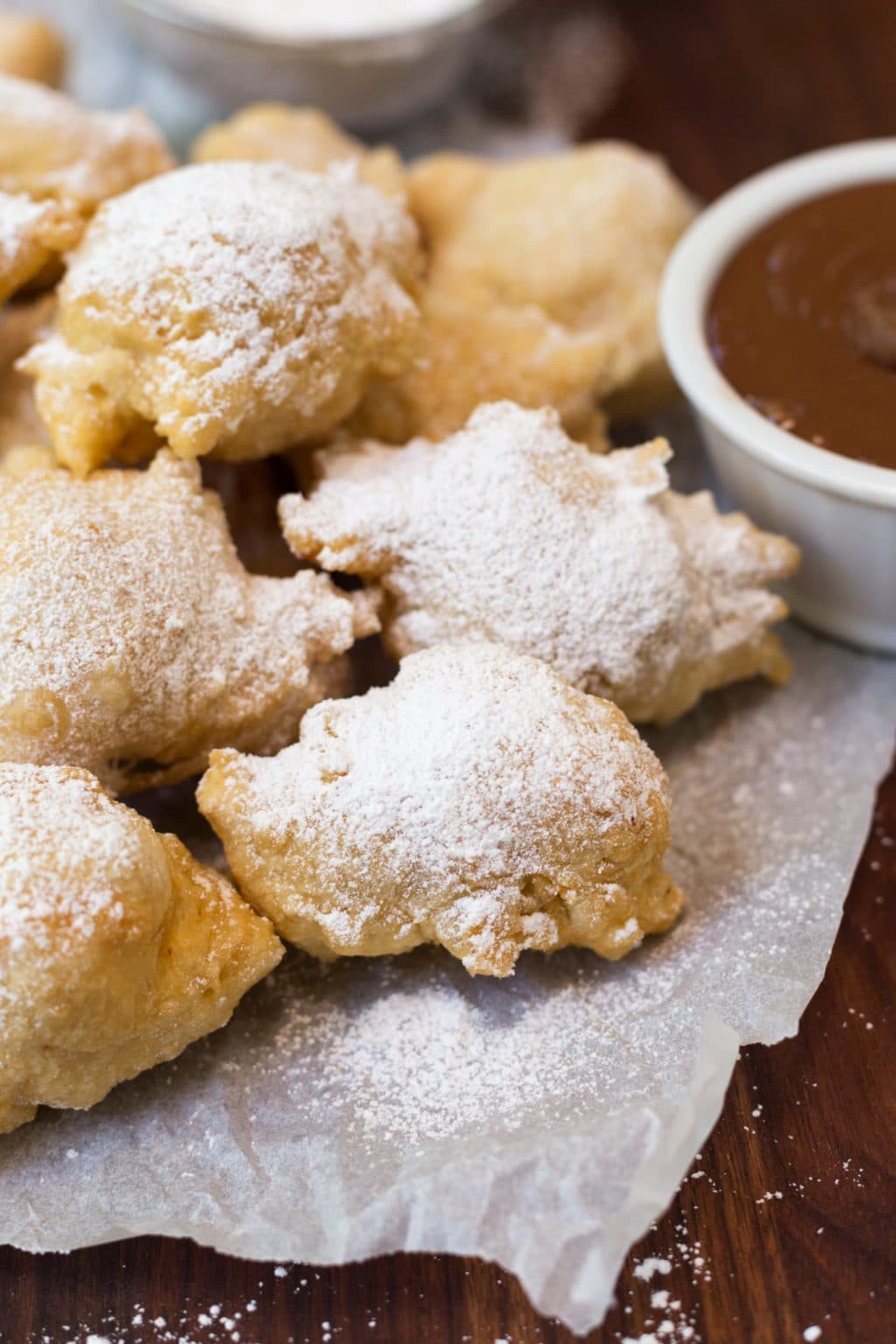
Zeppole are fried, sugared Italian pastry made from a simple yeast dough. Dip the warm zeppole into chocolate hazelnut spread for an extra-special treat!
My heart is always warmed by how well “Josephine’s” recipes are received when I post them on the blog. In truth, of all the restaurants I’ve visited and recipes I’ve made, my late grandmother’s heartfelt dishes are some of my favorite foods.
I can only imagine how excited she’d be to know that people are making and enjoying her recipes.
Today, I’m sharing Josephine’s Zeppole, fried Italian pastries. While there are about as many recipes for zeppole out there as there are Italian grandmothers, the version Nanny made uses a loose yeast dough, dropped into hot oil by the tablespoonful, and fried into beautifully irregular shapes.
Soft and chewy with a slightly crisp exterior, Nanny tossed the warm zeppole in plain granulated or cinnamon sugar or, more traditionally, sprinkled them liberally with powdered sugar.
As if they weren’t indulgent on their own, a dip in chocolate hazelnut spread takes the already delicious puffs to the next level. I’m really not sure who stumbled upon that pairing, but sweet, fried dough and Nocciolata is a match made in cheat day heaven!

While zeppole are a sweet dessert, the dough itself is not sweet at all. In fact, there’s only a quarter of a teaspoon of sugar in the recipe to help feed the yeast. The sweetness comes entirely from the sugar coating after frying.
As with many traditional dishes, zeppole recipes tend to vary by region and family. Some doughs include mashed potatoes, others leave out the yeast and make more of a thickened fritter-type batter with ricotta cheese and eggs.
Zeppole are often served at Christmas and New Year’s, as well as festivals. Most notably, a filled version are traditional for Saint Joseph’s Day in March. San Giuseppe Zeppole are usually made from a choux pastry and filled with custard or sweetened ricotta.
For a savory treat, some recipes adopt a Calabrese flair, omitting the sugar at the end and stuffing the zeppole (also known as sfinge) with anchovies. All wonderful in their own right, but my grandmother’s simple recipe is my favorite (though I might be biased in that assessment!).

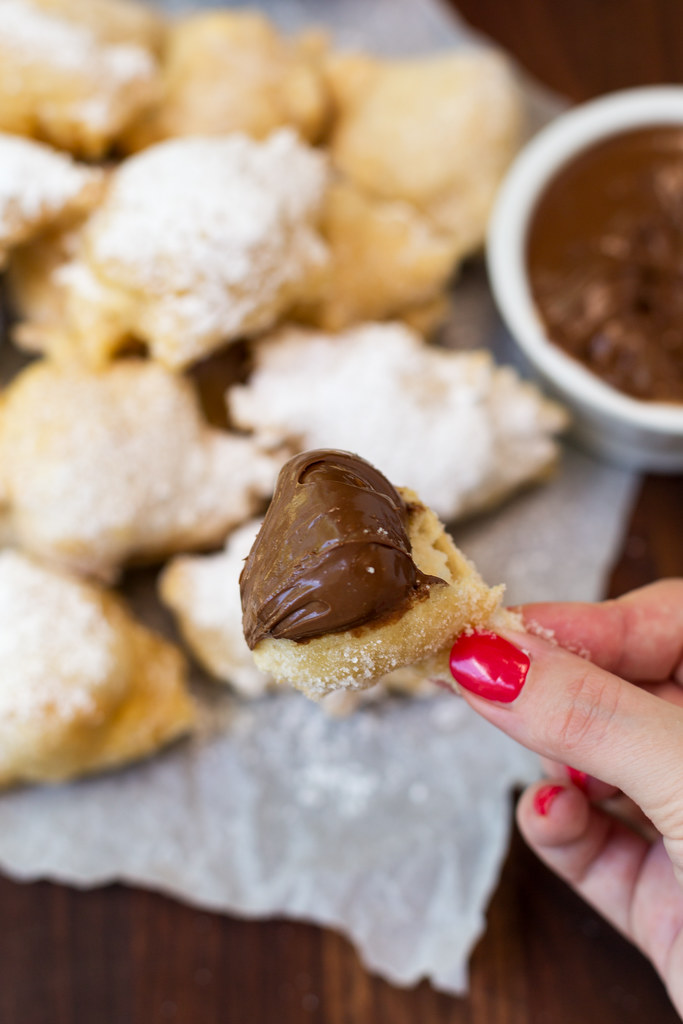
A few zeppole making tips: most importantly, serve them as soon as possible! Zeppole are best eaten warm, shortly after they’re fried. The longer they sit at room temperature, the heavier in texture they become.
The dough will be unlike what you’d expect with doughnuts. It’ll be very soft and stretchy, and not one that you’ll be able to roll, cut into shapes, or knot. I like to use two tablespoons to scoop and ease the dough into the hot oil, though a small cookie scoop lightly coated with room temperature oil also works well.
They’re a fun recipe to make with a helper in the kitchen; one person fries, the other tosses them in sugar as they’re removed from the fryer.
If using granulated or cinnamon sugar, you can either roll the zeppole in sugar in a plate, or shake them in a brown paper bag. The bag also works well with powdered sugar to create an even coating, though I often like how pretty the zeppole look when sprinkled with a sifter or sieve.
Eaten with just the sugar coating or dipped, zeppole are indulgent, moderately messy, and totally delicious. Expect sugar mustaches and drips of chocolate on your chin. They wouldn’t be Josephine’s Zeppole any other way!
Zeppole variations from around the Web:
St. Joseph’s Day Cream Puffs (Zeppole di San Giuseppe) from Ciao Italia
Ricotta Zeppole from The Cottage Market
More “Josephine” recipes on the blog:
Tomato Salad
Caponata (Eggplant Appetizer)
Anise Cookies

Josephine’s Zeppole
Ingredients
- 1 packet active dry yeast (2-1/4 teaspoons)
- ¼ teaspoon granulated sugar
- 1-1/2 teaspoons table salt
- 1-3/4 cups warm water , 100-110 degrees F
- 3 cups all purpose flour
- vegetable oil , for frying
- powdered sugar, granulated sugar, or cinnamon-sugar , for dusting the fried zeppole
- chocolate hazelnut spread , for serving (optional)
Instructions
- In a large bowl, stir together yeast, granulated sugar, salt, and warm water, until dissolved. Let stand 5-10 minutes until yeast is foamy. Stir in flour until well combined. Cover bowl with plastic wrap and let dough rise until doubled in volume, about 2 hours. Risen dough will be very sticky and elastic in texture.
- Heat 2-3 inches of oil in a large, heavy-bottomed pot (I use 1 gallon of oil for my 7-quart Dutch oven) to 350-375 degrees F on a candy thermometer. Carefully drop rounded tablespoonfuls of the risen dough into the hot oil, using a second spoon to help ease the dough into the oil. (A small, lightly-oiled cookie scoop also works well.) Fry the zeppole, about 4-6 at a time depending on the size of your pot, until the dough is cooked through and golden, 5-8 minutes. Regulate the heat to maintain oil temperature. Transfer to a paper towel-lined rack or pan.
- While warm, roll fried zeppole in granulated sugar or dust liberally with powdered sugar. Alternatively, you can place either of the sugars in a brown paper bag, add the warm, fried zeppole, and shake to coat. Serve immediately.
Nutrition Estimate
Nutrition information is automatically calculated, so should only be used as an approximation.
Please note that our recipes have been developed using the US Customary measurement system and have not been tested for high altitude/elevation cooking and baking.











My gram was named Josephine Padula. We have tried for many years to come close to her Christmas Eve zeppoli. This is it and hands down the best we ever made! Thank you. I’m not changing a thing. We called and shared our accomplishment with our cousins! Thank you again for delivering this memory.
I’m so glad you and your family enjoyed the recipe, Lisa, and that it could help bring you warm memories of your grandmother, Josephine, as it does mine. Merry Christmas!
I HAVE MADE THIS RECIPE MANY TIMES. THANK YOU ITS WONDERFUL.
I’m confused about adding the salt with the yeast. Bread-yeast recipes warn against salt being near yeast as it can kill it…?
Not mixing together salt and yeast is a highly debated subject. Regardless, there is not enough salt in this recipe to affect the yeast, when it is prepared as directed.
I’m planning to make these today – Can I make these using canola oil if I don’t have vegetable oil on hand??
Hi Kaitlin,
Yes, you can deep fry these in canola oil.
Enjoy!