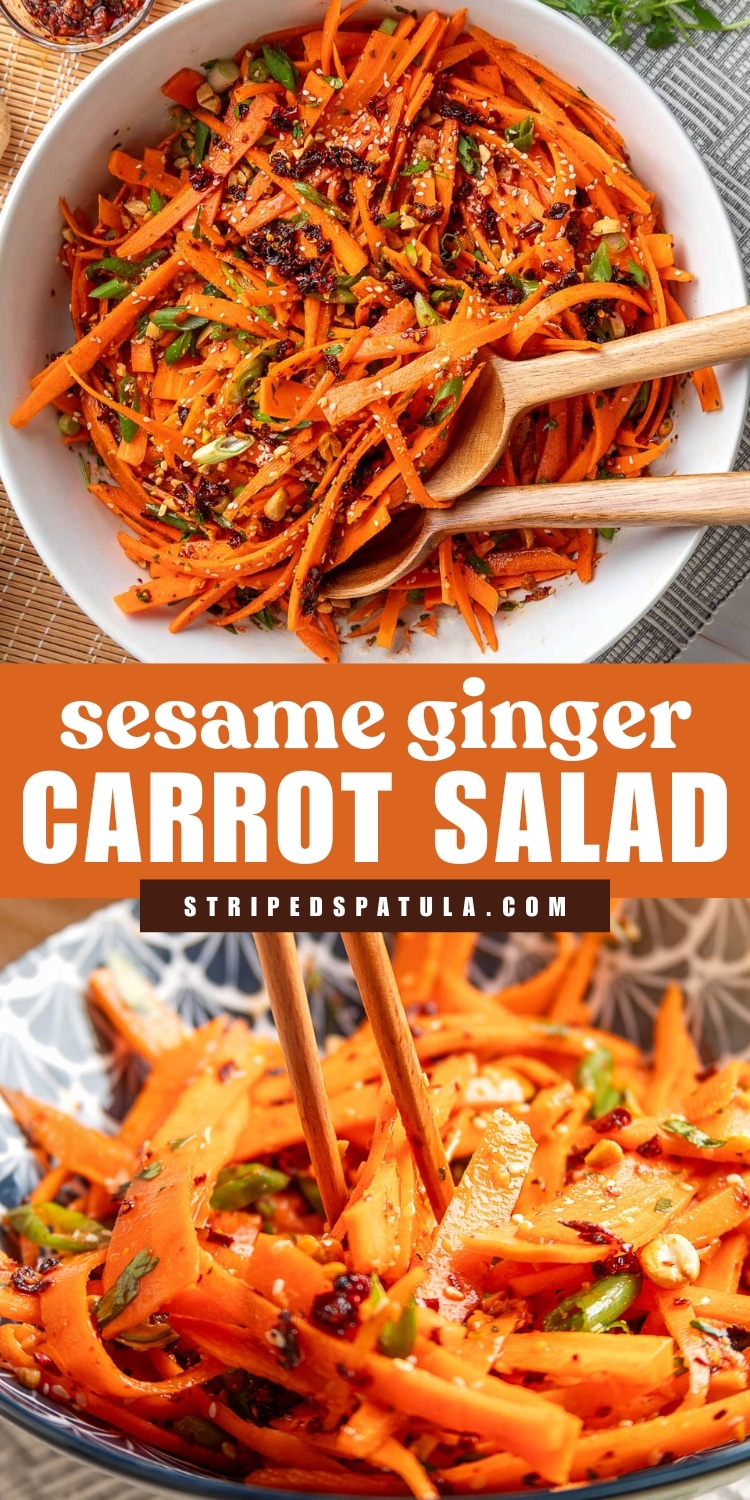
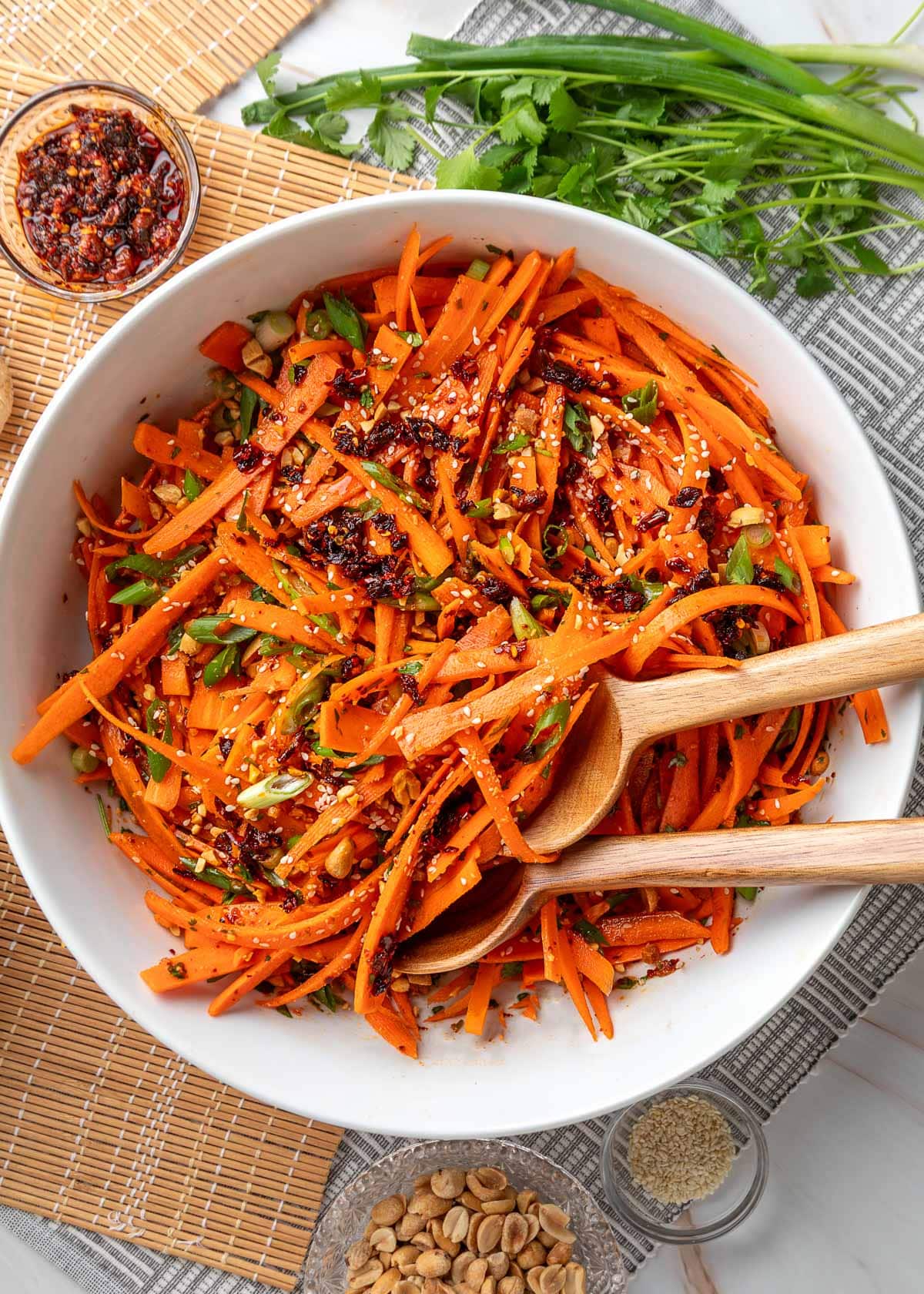
This Sesame Ginger Carrot Salad is bright, refreshing, and packed with bold, aromatic flavors. Fresh carrots and scallions are tossed in a tangy dressing with sesame oil, ginger, garlic, and soy sauce, then finished with peanuts, sesame seeds, and chili crisp for extra crunch and a little heat.
Before You Start Cooking
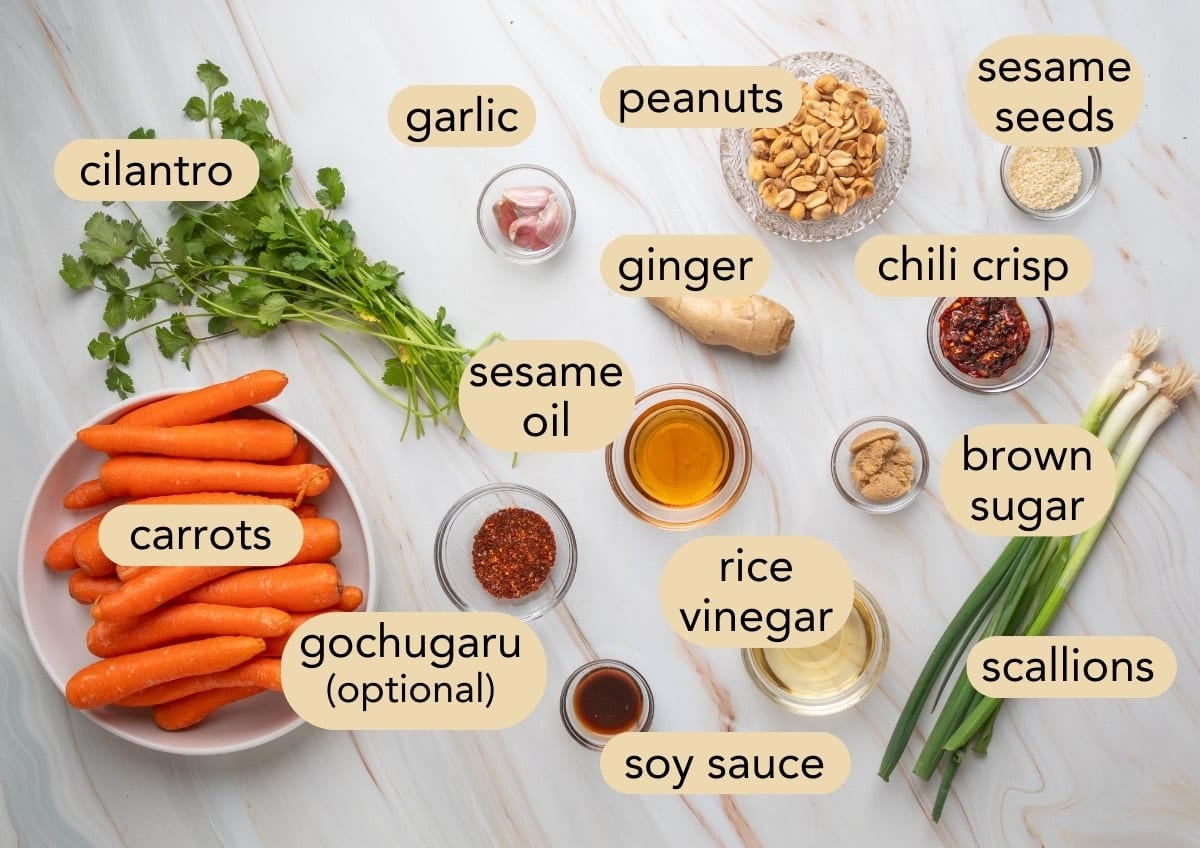
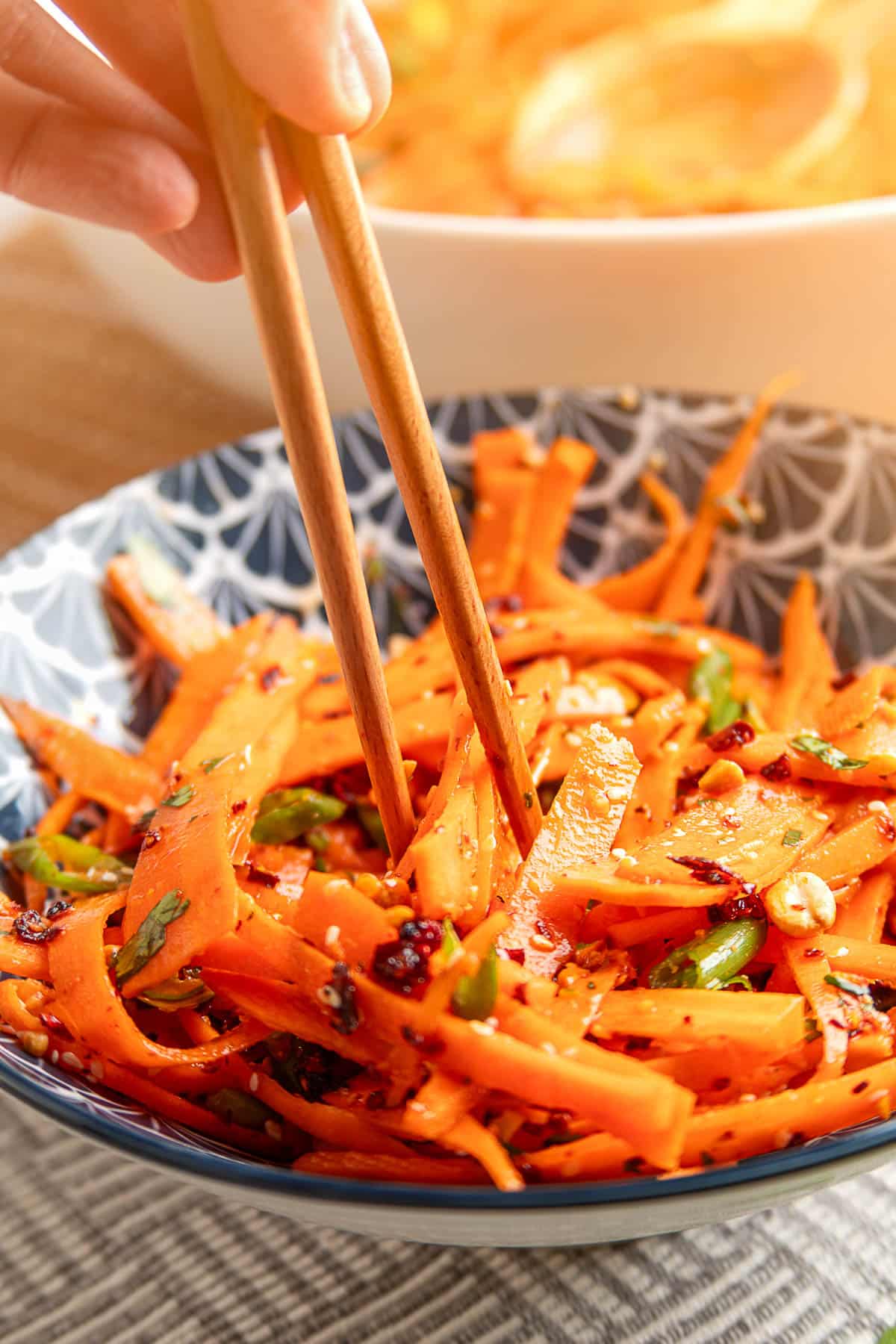
- Carrots. Use whole carrots for this recipe, either cut into ribbons or matchsticks (instructions below). Ribbons make a beautiful presentation and develop a bit of a softer texture in the dressing, while matchsticks keep the salad extra crisp. The choice is yours! To save a little prep time, you can also buy pre-cut matchstick carrots at the grocery store.
- Use fresh garlic and ginger. Since the dressing is simple, use fresh aromatics (rather than powdered or pastes) to maximize the salad’s flavor.
- Let the Salad Sit (If You Have Time). You can serve the salad right away, but letting it marinate briefly gives the flavors time to meld and allows the sesame-ginger dressing to soak into the carrots.
- Adjust the Heat Level. Gochugaru (the Korean chile flakes used to make kimchi) adds fruity, smoky heat and a beautiful red color to the dressing. If you prefer a milder salad, simply reduce the amount or leave it out altogether.
How to Make This Sesame Ginger Carrot Salad
Step 1: Prep the Salad Base
Wash and peel the carrots, trimming off any green tops if you’re using farm-fresh carrots with the greens still attached. (Don’t discard them! Carrot tops can be added to salads, blended into green smoothies, or used to make sauces and stocks.)
- For carrot ribbons: Use a vegetable peeler or mandolin to shave the carrots lengthwise into long, thin strips. A serrated vegetable peeler works particularly well here—it creates slightly textured ribbons that help the sesame dressing cling to the carrots.
- For matchsticks (julienned carrots): Using a julienne peeler or mandolin with a julienne blade makes this quick and easy.
If you prefer to julienne the carrots by hand, start by cutting the peeled carrots crosswise into 2- to 3-inch pieces with a chef’s knife. Trim a thin slice from the rounded sides of each piece to create a flat surface and a more stable rectangular shape on the cutting board.
Slice each piece lengthwise into thin planks, about ⅛-inch thick. Stack a couple of the planks at a time, then cut them lengthwise again into 2- to 3-inch-long matchsticks, also ⅛-inch thick.
As you slice, tuck your fingertips under into a “claw” grip to protect them and guide the knife safely along the cutting board.
Add the prepared carrots to a large mixing bowl along with chopped fresh cilantro, scallions sliced on the bias (both the white and green parts), and chopped, lightly salted dry-roasted peanuts.
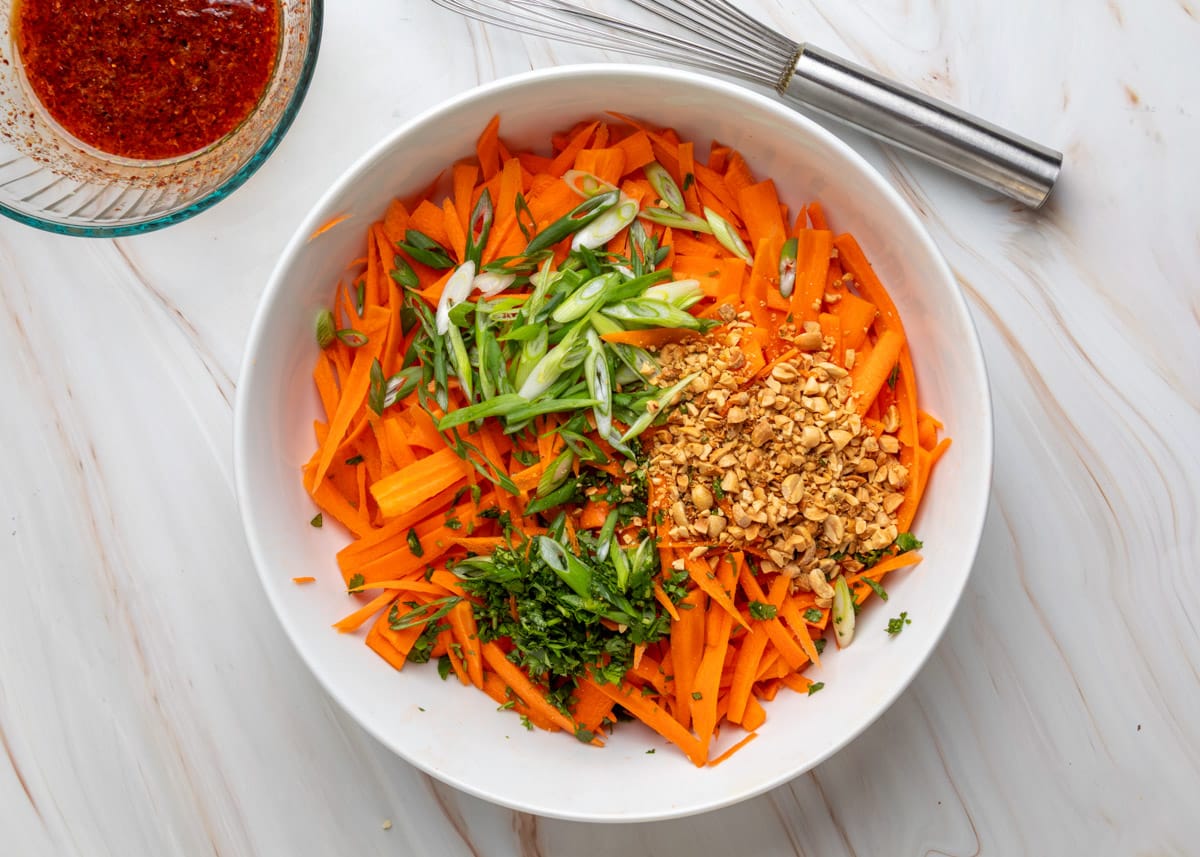
Step 2: Make the Dressing
In a bowl, whisk together the following ingredients for the dressing:
- Rice vinegar. Adds bright, mild acidity that keeps the dressing tasting fresh and balanced.
- Toasted (roasted) sesame oil. Adds a warm, nutty, roasted flavor and depth, giving the dressing its savory sesame character.
- Soy sauce. I usually reach for reduced-sodium shoyu and adjust with a pinch of salt if the dressing needs it. You can also use Chinese light soy sauce, regular shoyu, or tamari (for gluten-free).
- Light brown sugar. Balances the vinegar and savory flavors and enhances the natural sweetness of the carrots.
- Garlic and Ginger. I like to peel and grate both on a microplane so they blend smoothly into the dressing rather than leaving larger pieces that can taste harsh or overpowering.
- Gochugaru (optional). The heat level of this Korean chili flake/powder can vary by brand. Start with 1 teaspoon and increase to taste, up to a full tablespoon if you prefer a spicier dressing.
The finished dressing should taste tangy, savory, and slightly sweet, with a beautiful sesame aroma.
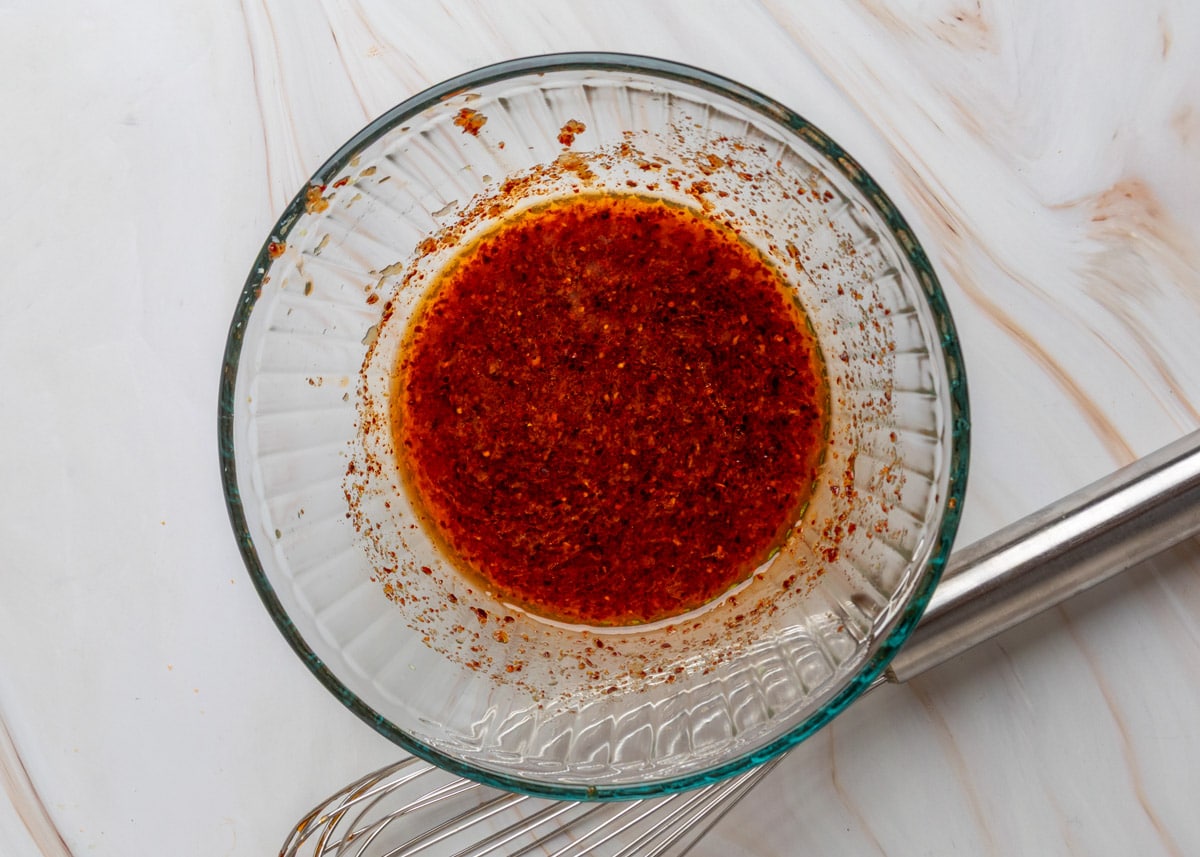
Step 3: Toss the Salad and Serve
Add the prepared carrots to a large mixing bowl along with the chopped cilantro, sliced scallions (both the white and green parts), and chopped lightly-salted dry-roasted peanuts.
Pour the dressing over the top and toss well so everything is evenly coated.
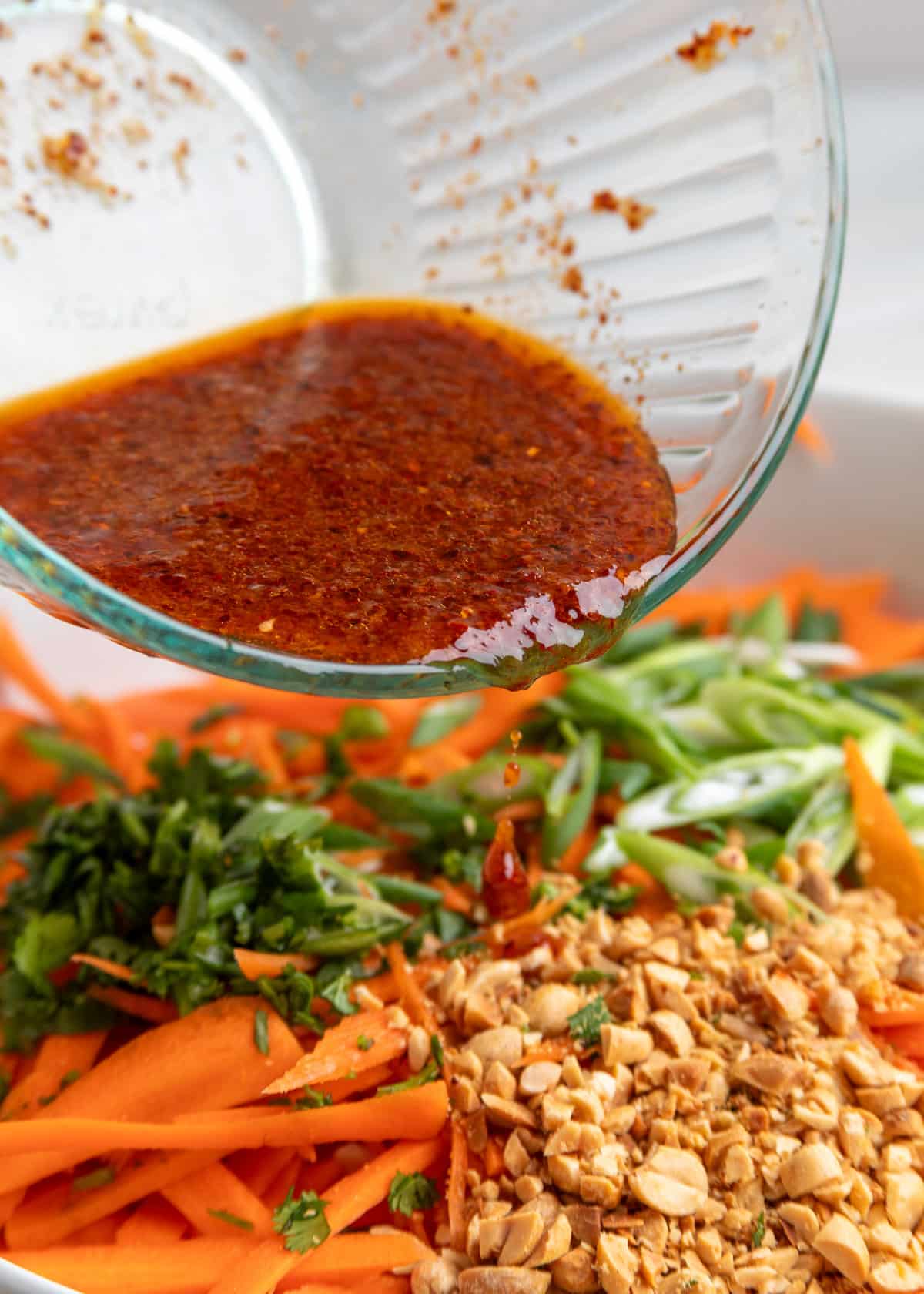
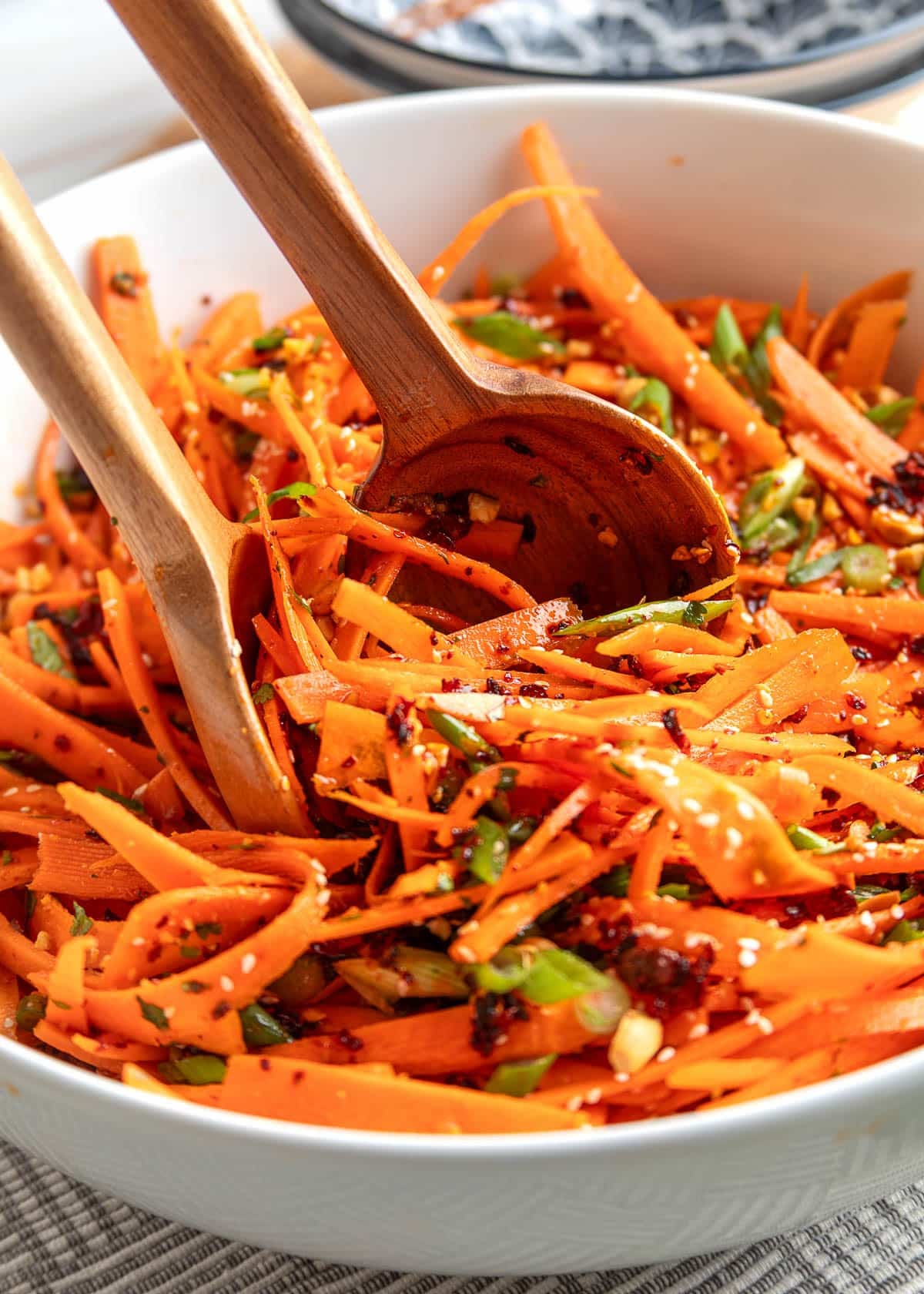
I like to let the salad sit at room temperature for about 20 to 30 minutes before serving to let the flavors meld and soak into the carrots. Just before serving, give the salad another quick toss to redistribute any dressing at the bottom of the bowl.
Finish by sprinkling the salad with sesame seeds, extra chopped peanuts, and a drizzle of your favorite chili crisp for a final pop of texture and heat.
I love serving this bright Sesame Ginger Carrot Salad as a fresh, crunchy contrast to richer main dishes. It’s delicious with grilled chicken or steak, teriyaki salmon, Korean BBQ, rice or noodle bowls, and simple weeknight stir-fries.
Easy Variations
One of the reasons I love this salad is how flexible it is. You can easily customize it with additional vegetables and add-ins for different flavors and textures. Try adding:
- Thinly sliced red or yellow bell peppers.
- Shredded cabbage for extra crunch.
- Cucumbers cut into ribbons or thin slices.
- Cooked shelled edamame for a little protein
- Other nut varieties. If you prefer not to use peanuts, chopped cashews or sliced almonds are also delicious.
Keep in mind that vegetables like peppers and cucumbers contain water, which will release the longer they sit in the dressing. If using them, you’ll want to add them close to serving time for the best texture.
Depending on how many extra vegetables you add, you might want to double the dressing so everything is well-coated and flavored.
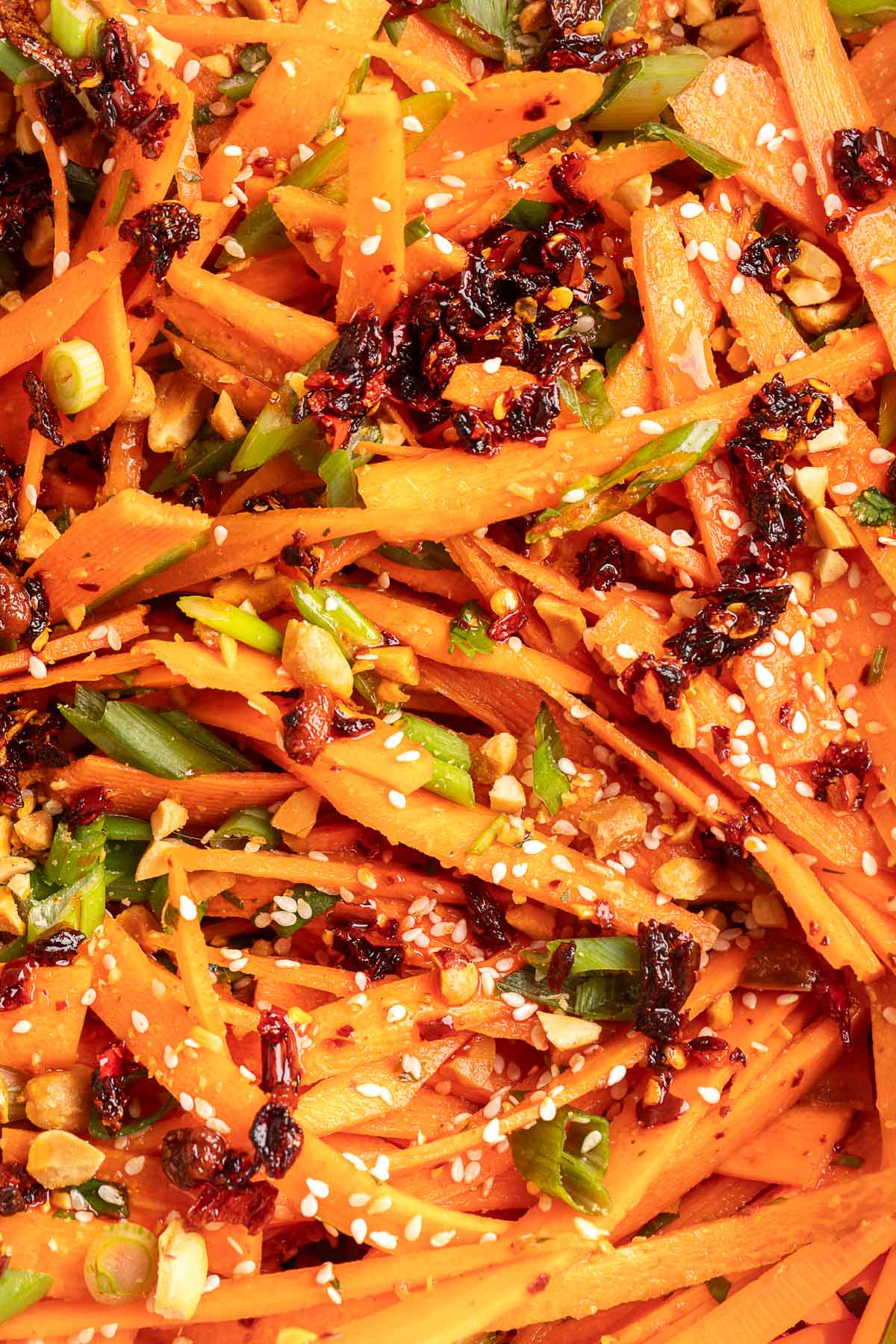
Storage and Make-Ahead Tips
Store leftover Sesame Ginger Carrot Salad in an airtight container in the refrigerator for up to 3 to 4 days. The flavors will deepen as the salad sits, though the carrots will gradually soften and lose some of their crunch over time.
If you’re making the salad ahead for a gathering, it’s best to store the dressing separately and toss the salad just before serving. This helps keep the carrots crisp and prevents the cilantro and scallions from wilting in the dressing. Also add the sesame seeds, peanuts, and chili crisp at the end for the best texture.
More Asian-Inspired Salad Recipes
Sesame Ginger Carrot Salad
Ingredients
For the Salad
- 2 pounds whole carrots (see Note 1)
- ½ cup sliced scallions , white and green parts, sliced on the bias.
- ½ cup chopped lightly-salted dry roasted peanuts
- 3 tablespoons chopped fresh cilantro
For the Dressing
- 4 tablespoons rice vinegar
- 2 tablespoons toasted sesame oil (see Note 2)
- 1 tablespoon soy sauce (see Note 3)
- 2 teaspoons light brown sugar , lightly packed
- 1 to 3 teaspoons gochugaru (optional, see Note 4)
- 2 small cloves garlic , peeled and grated on a microplane
- 2 teaspoons grated fresh ginger
For Serving
- 2 to 3 tablespoons chili crisp (optional, see Note 5)
- 1 tablespoon sesame seeds
- additional chopped peanuts
Instructions
- Wash and peel the carrots. Cut them into ribbons using a vegetable peeler or mandolin, or julienne them into matchsticks using a julienne peeler, mandolin, or chef’s knife.
- Add the carrots to a mixing bowl, along with the scallions, cilantro, and 1/2 cup chopped peanuts. Set aside while you prepare the dressing.
- In a small bowl, whisk together the rice vinegar, toasted sesame oil, soy sauce, brown sugar, garlic, ginger, and gochugaru (if using) until well combined.
- Pour the dressing over the salad and toss well so everything is evenly coated.
- Recommended: let the salad sit at room temperature for 20–30 minutes to allow the carrots to absorb the dressing's flavors.
- Just before serving, toss the salad again and sprinkle with sesame seeds, additional chopped peanuts, and a drizzle of chili crisp, if desired.
Notes
Nutrition Estimate
Nutrition information is automatically calculated, so should only be used as an approximation.
Please note that our recipes have been developed using the US Customary measurement system and have not been tested for high altitude/elevation cooking and baking.