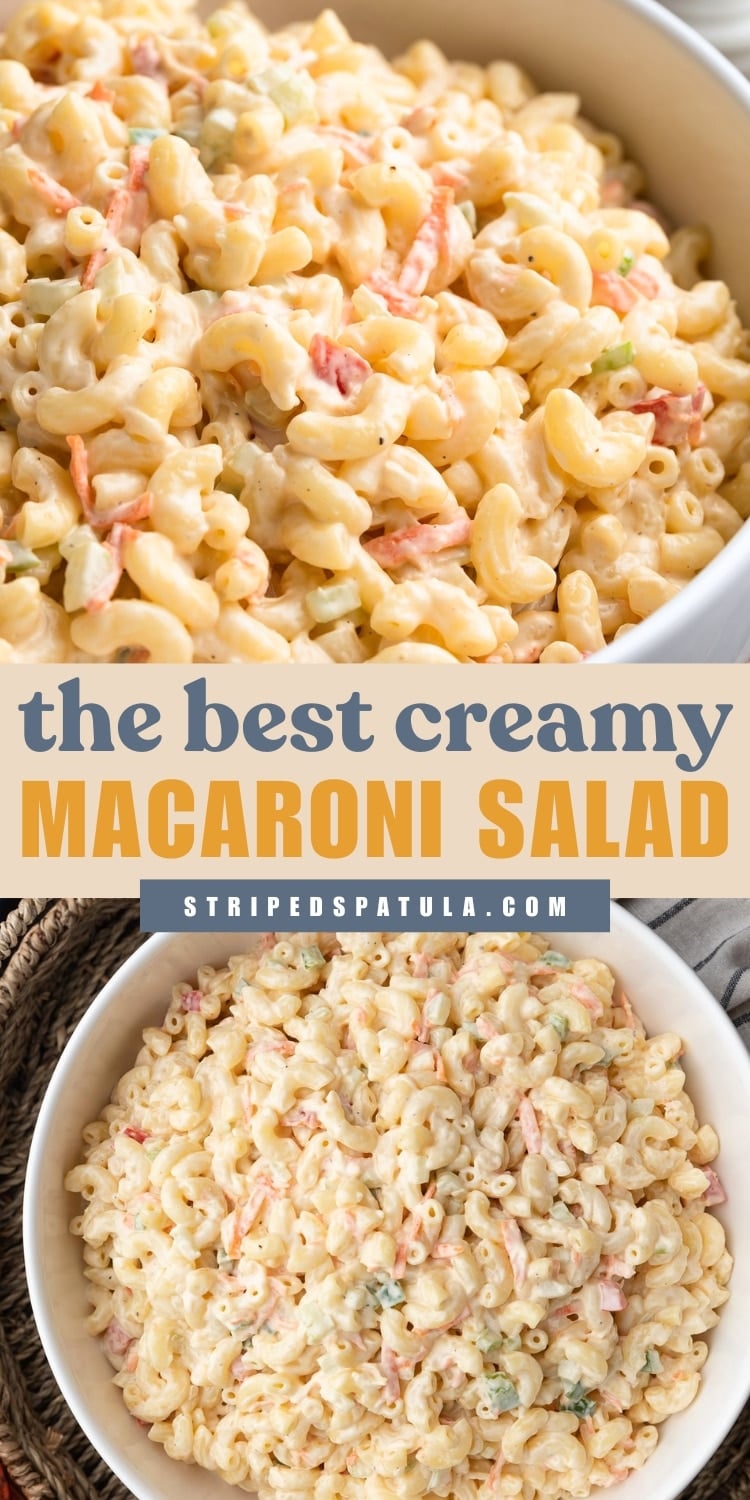
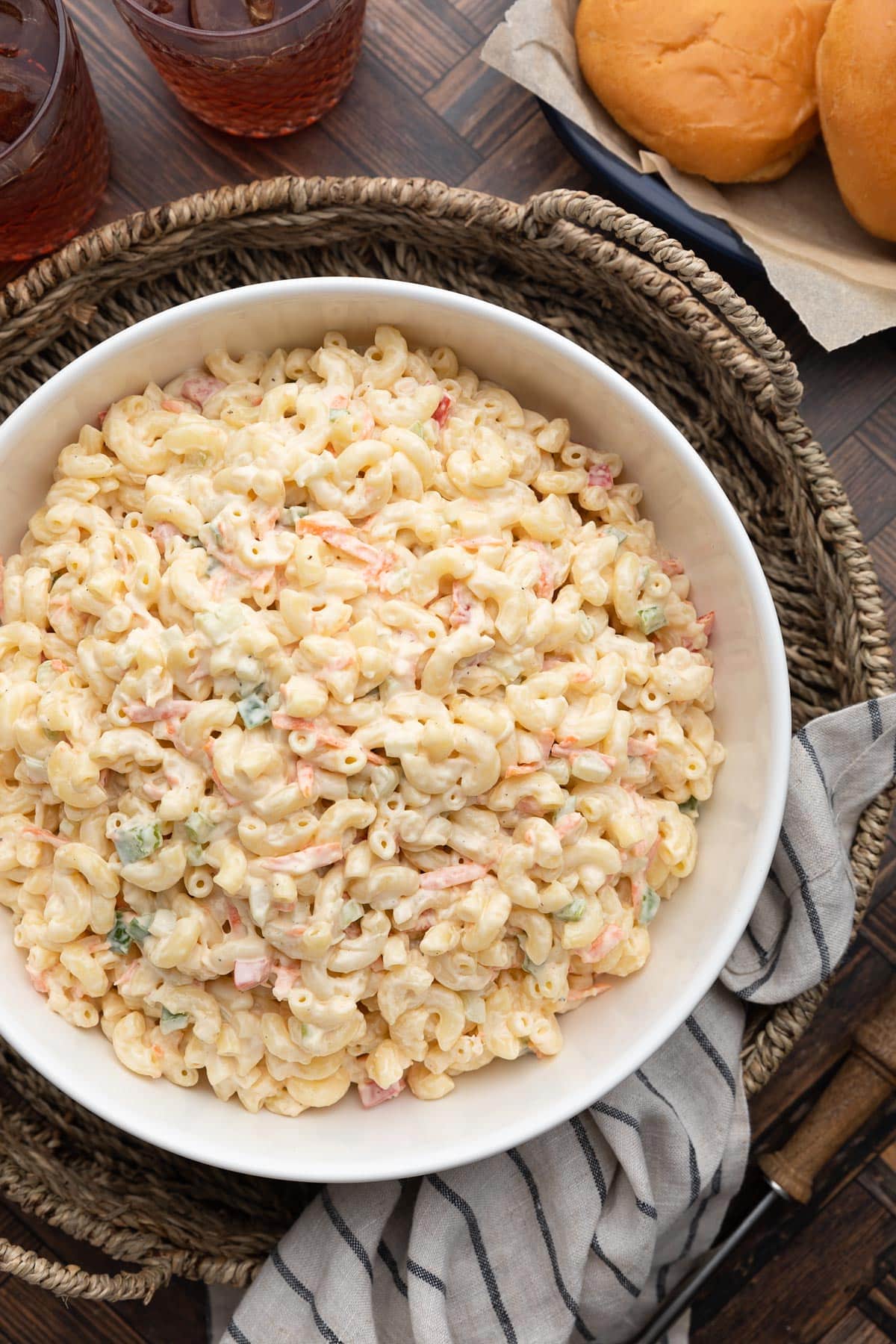
My grandmother’s macaroni salad has been a staple at our cookouts for as long as I can remember — and it’s one of my personal favorite summer sides. With creamy dressing, crisp vegetables, and just the right amount of tang, it’s reminiscent of the classic you’d find at many New Jersey deli counters.
Before You Start Cooking
- The vinegar soak is key — don’t skip it. Unlike many macaroni salads, this recipe skips rinsing the cooked pasta and instead tosses the hot, drained macaroni in vinegar. This helps the tangy flavor absorb into the pasta itself, not just the dressing.
- The dressing goes in two stages. Only a portion of it gets mixed in before the salad chills, and the rest is stirred in just before serving. Since all macaroni salads absorb dressing as they sit, holding some back ensures the salad is creamy when it hits the table.
- Plan ahead. This salad needs to chill for 4 hours in the refrigerator before serving, so the first round of dressing can absorb and flavor the macaroni.
How To Make Macaroni Salad
Step 1: Cook and Soak the Macaroni
Bring a large pot of water to a boil and salt it generously. Well-salted water seasons the pasta as it cooks.
Cook the elbow macaroni a couple of minutes past al dente. You’re looking for noodles that are tender and cooked through, but not so soft that they’re mushy or falling apart. The cooking time can vary by brand.
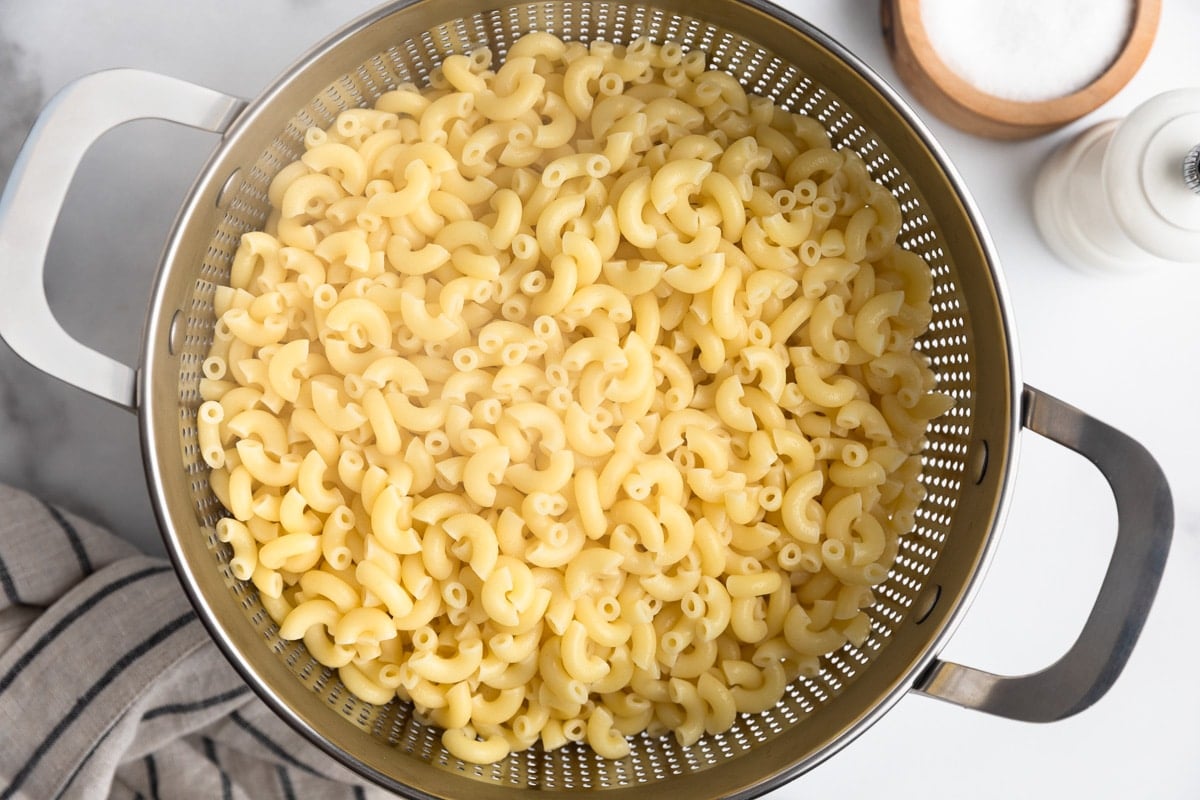
Drain the macaroni well, then transfer it, hot and without rinsing, into a large bowl. (Use one that’s big enough to eventually mix the whole salad together.)
Pour in the distilled white vinegar and fold gently with a rubber spatula until every piece of macaroni is coated.
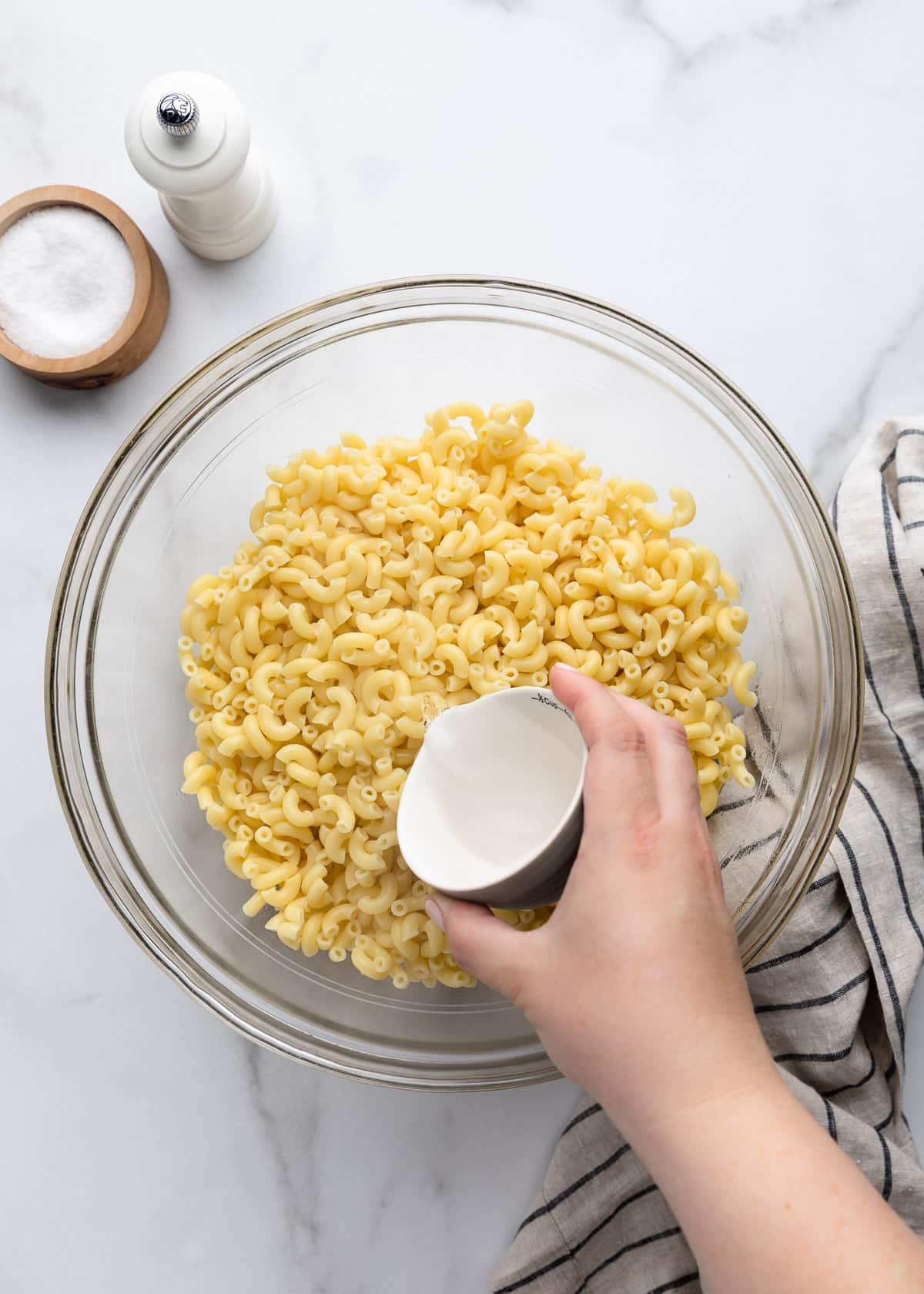
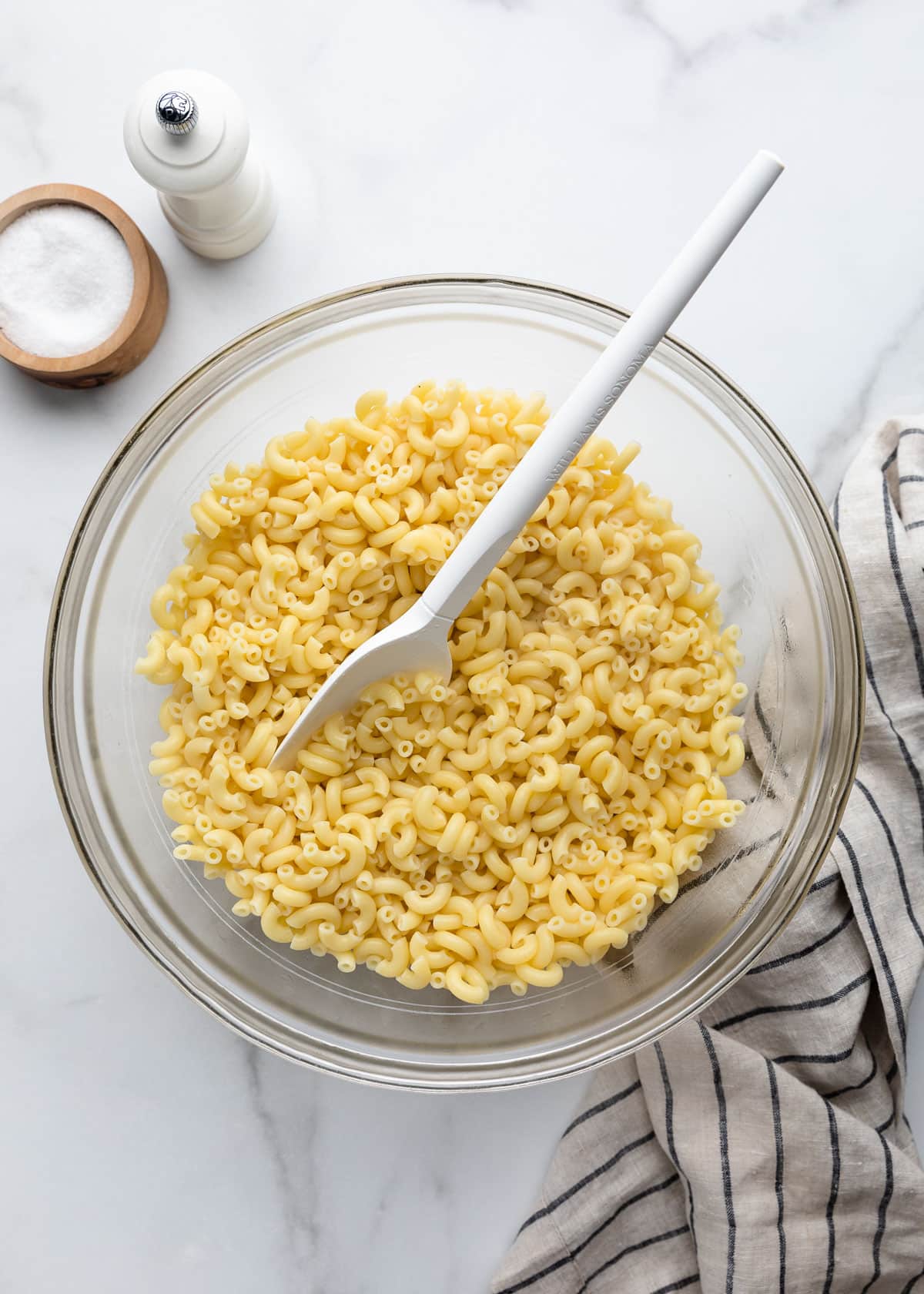
Let the macaroni cool for about 10 to 15 minutes, stirring gently two or three times so the vinegar soaks in evenly. When it’s ready, the macaroni should no longer be piping hot and should have fully absorbed the vinegar, with no pooling at the bottom of the bowl.
Step 2: Make the Dressing and Prep Your Veggies
While you wait for the macaroni to cook and soak, prep your vegetables and make the creamy dressing so you’re ready to assemble the salad.
For the vegetables:
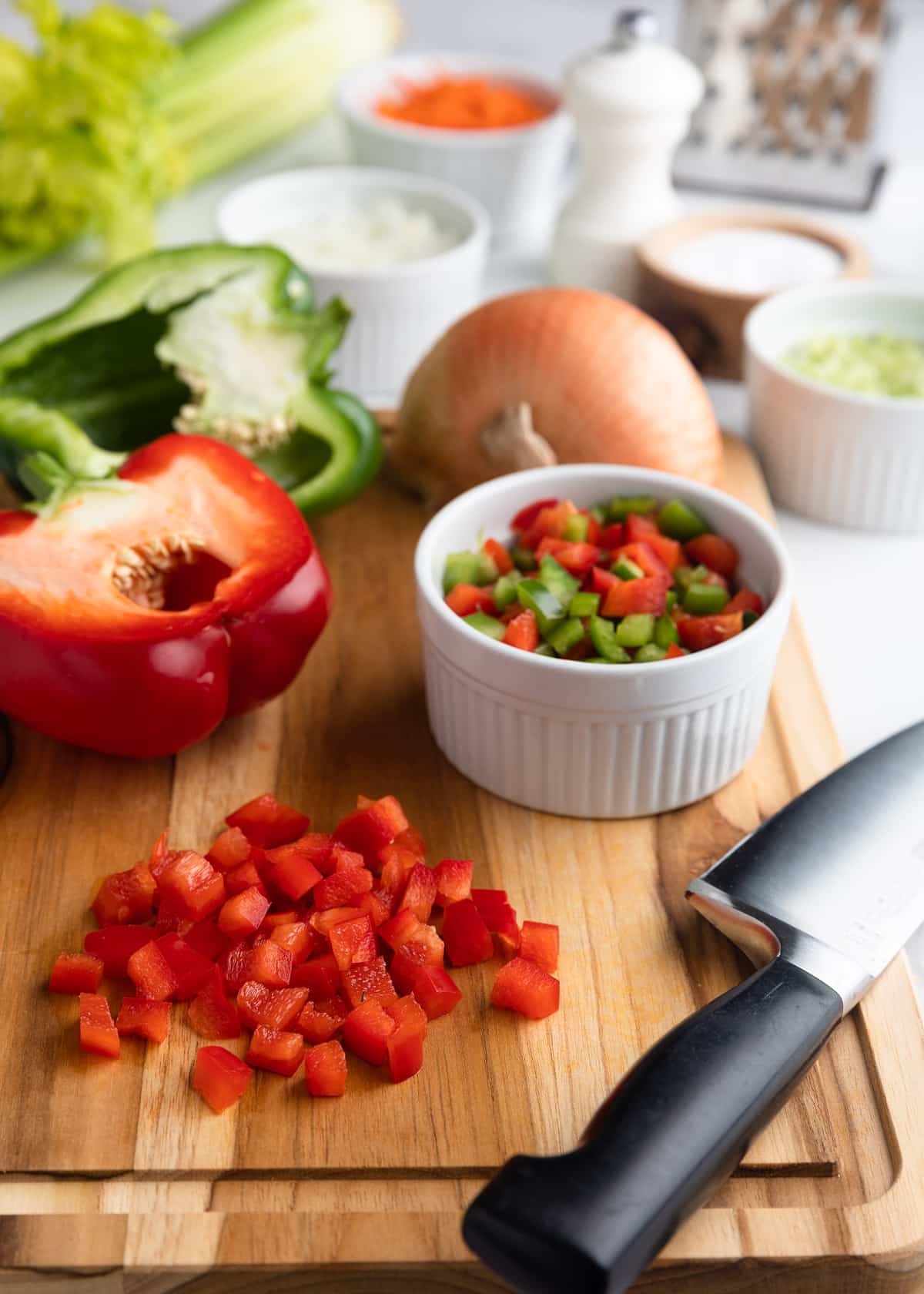
- Celery. Finely dice it. I like to peel off the tougher outer strings on the stalk first. My grandmother always did this for cold salads, and I find that it makes a difference in texture.
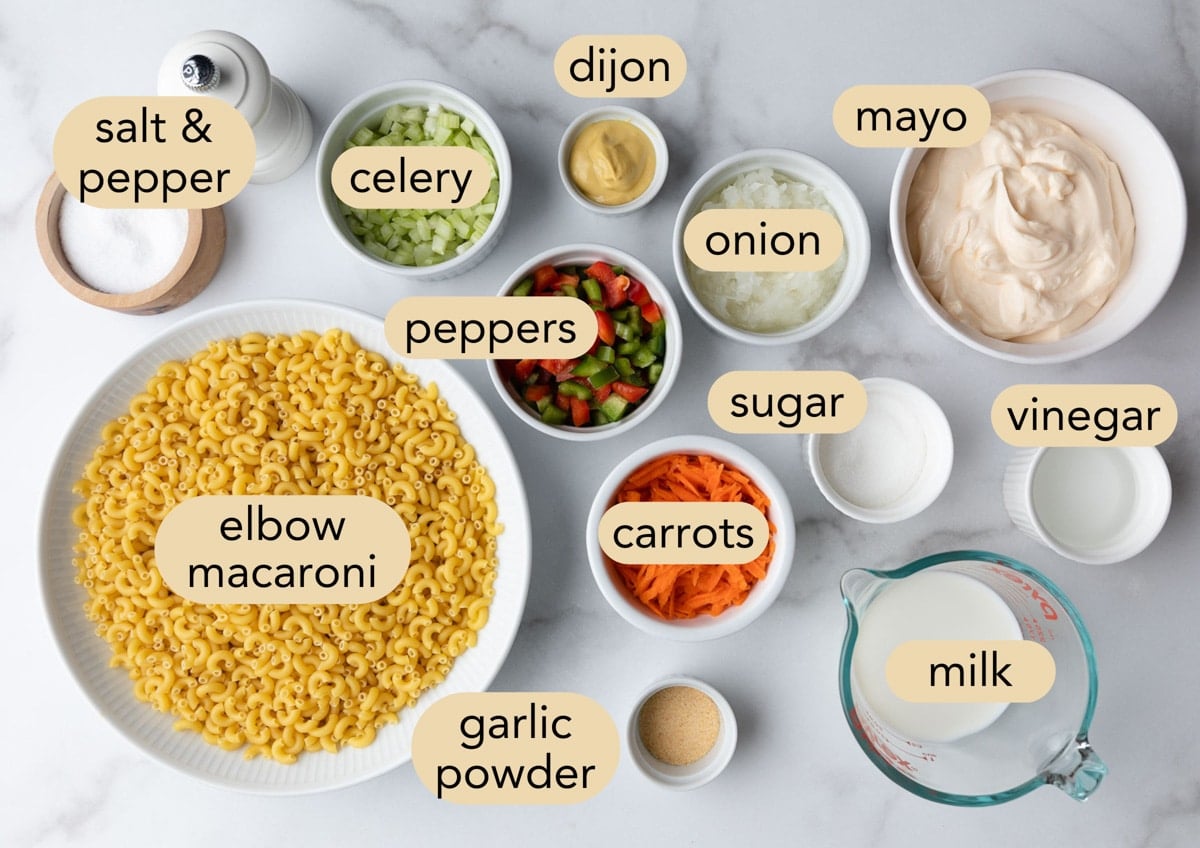
- Bell pepper. I like a mix of red and green. Red adds a touch of sweetness; green keeps things on the savory side. You can use all one color if you prefer, just keep those flavor differences in mind.
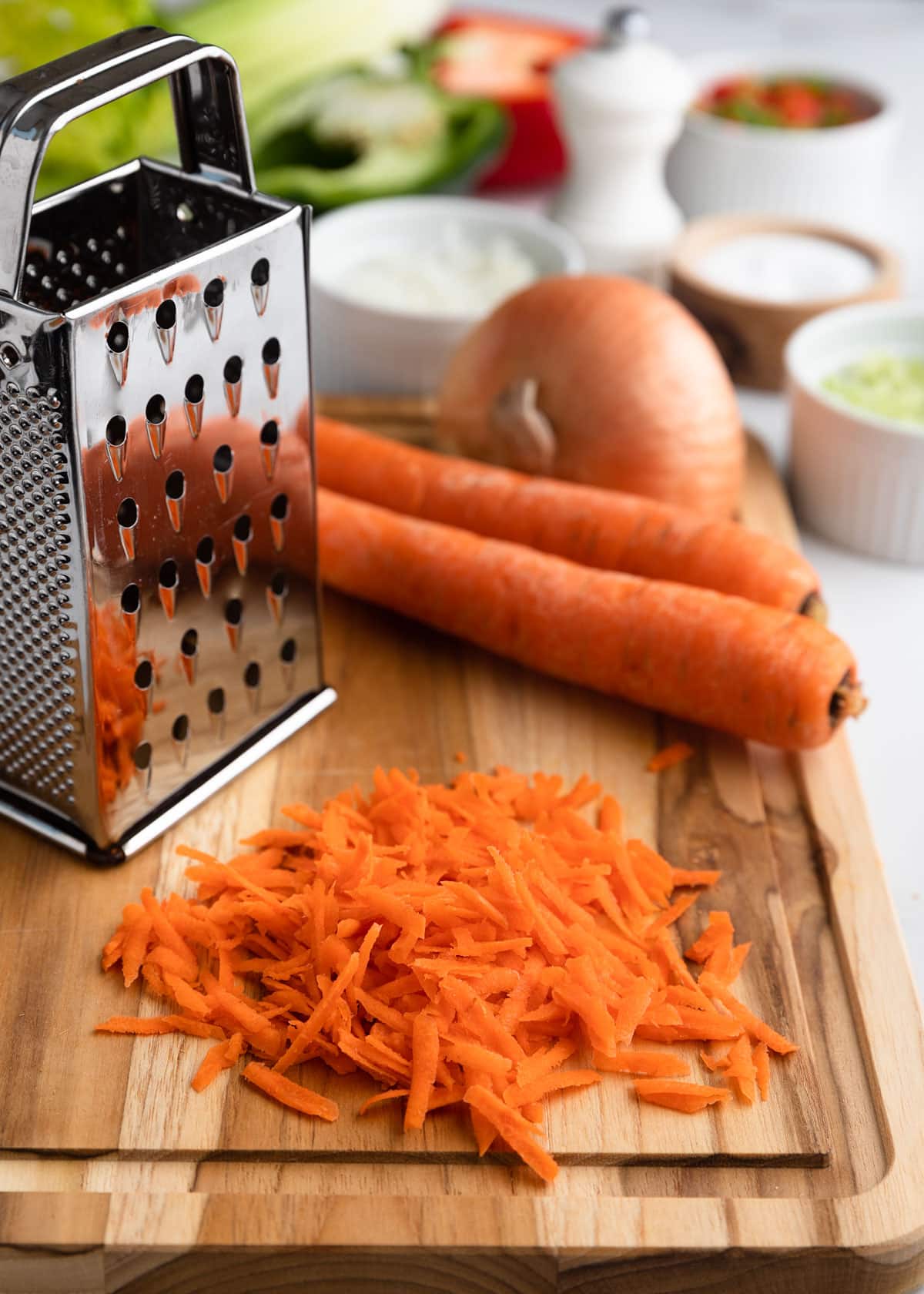
- Carrot and Vidalia onion. Peel and grate both on the large holes of a box grater. The onion will release a little juice as you go — add it right to the bowl. If there’s a lot, drain off the excess.
For the dressing:
Start with full-fat real mayonnaise. For this recipe, don’t use jarred dressings, like Miracle Whip, which are sweeter and will change the salad’s flavor. Growing up in New Jersey, this was always a Hellmann’s household, and that’s still what I use when making this recipe.
Whisk in whole milk, Dijon mustard (I use Maille), granulated sugar, granulated garlic powder, salt, and freshly ground black pepper. Since we’re not rinsing the pasta, the milk helps loosen the dressing so the macaroni salad isn’t too thick.
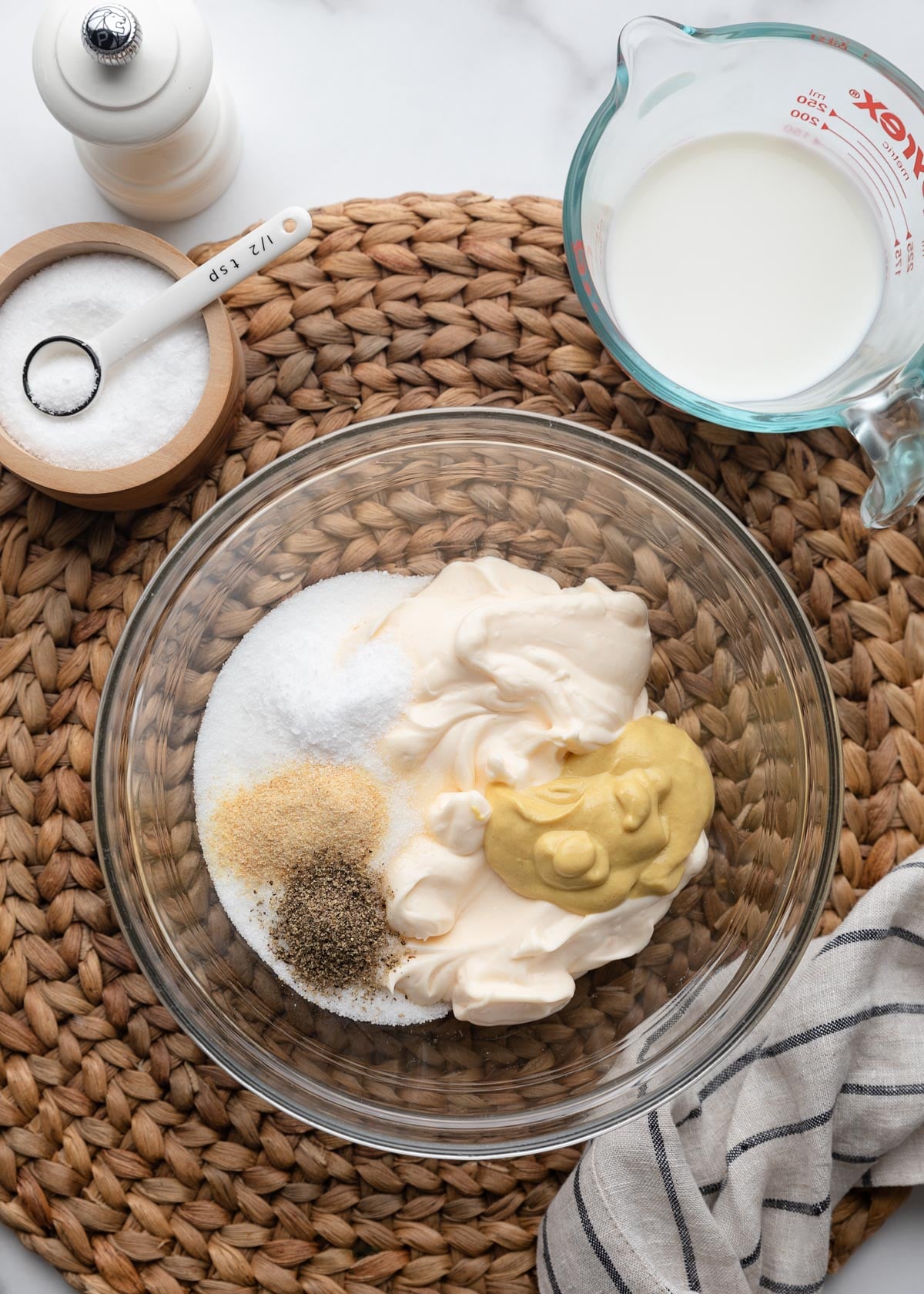
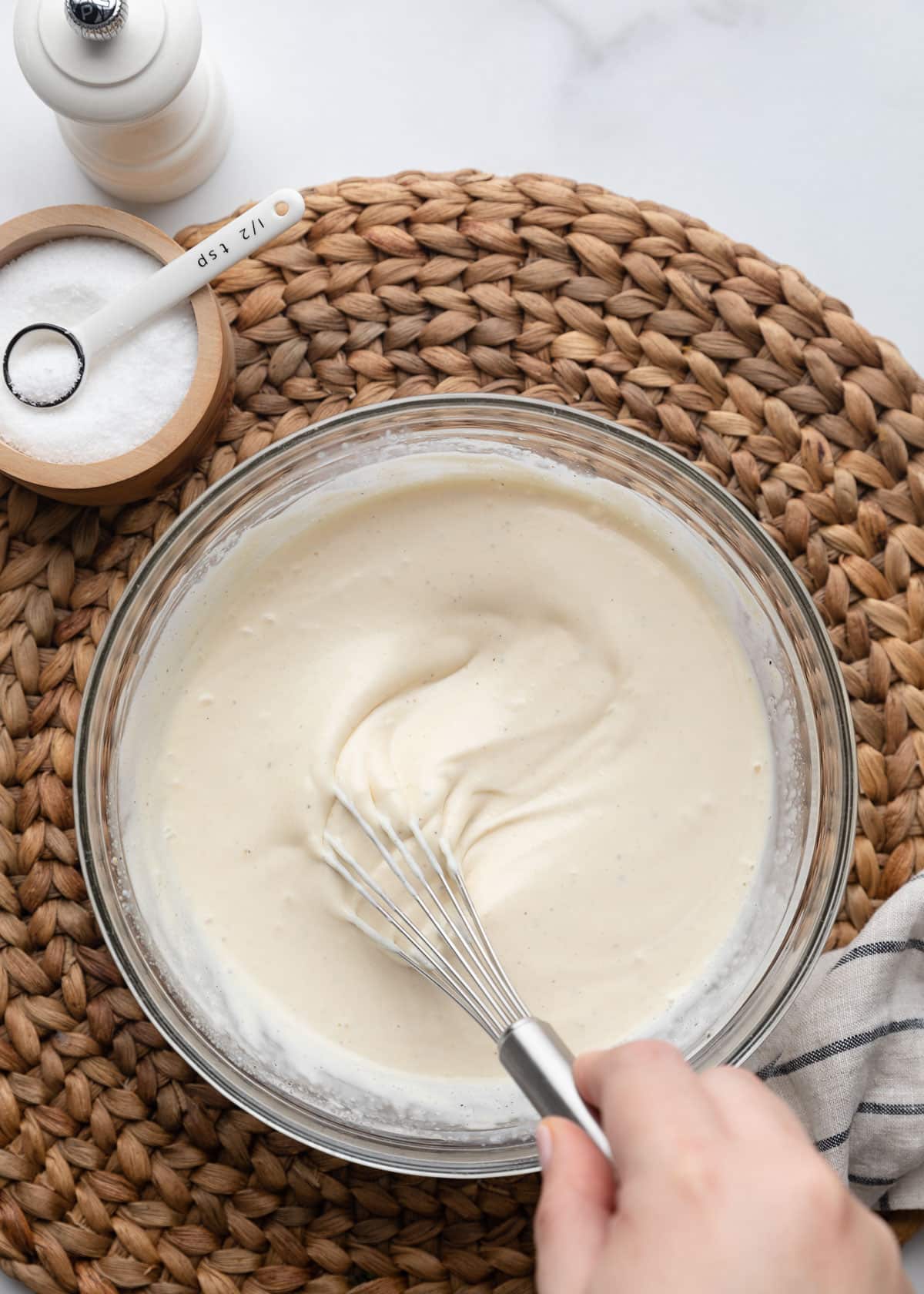
You can tweak the dressing’s sweetness to your liking. My grandmother’s macaroni salad used just enough sugar to balance the vinegar and rich mayonnaise, which is how my family likes it. If you prefer a sweeter dressing, you can add a bit more sugar.
Step 3: Combine and Chill
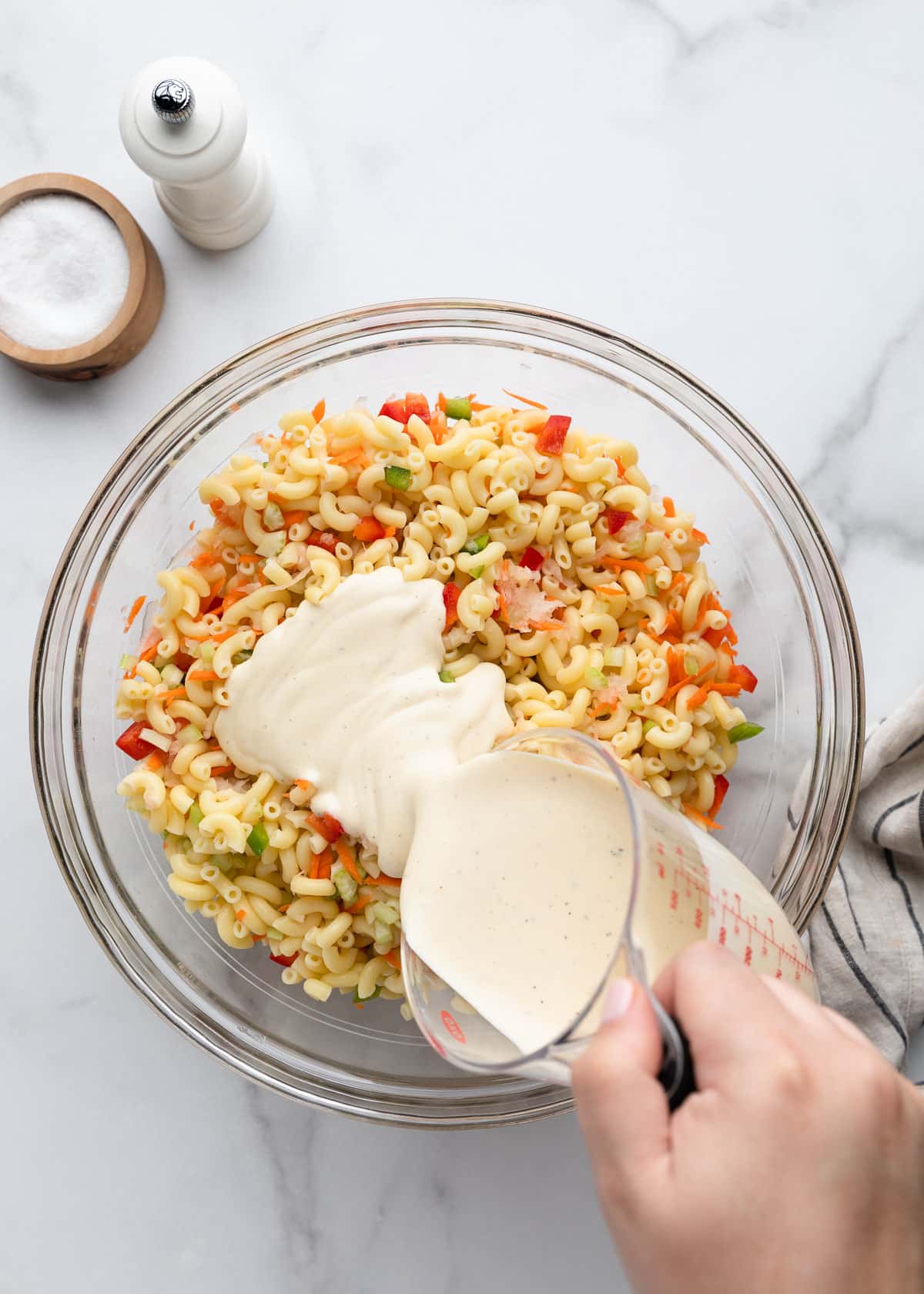
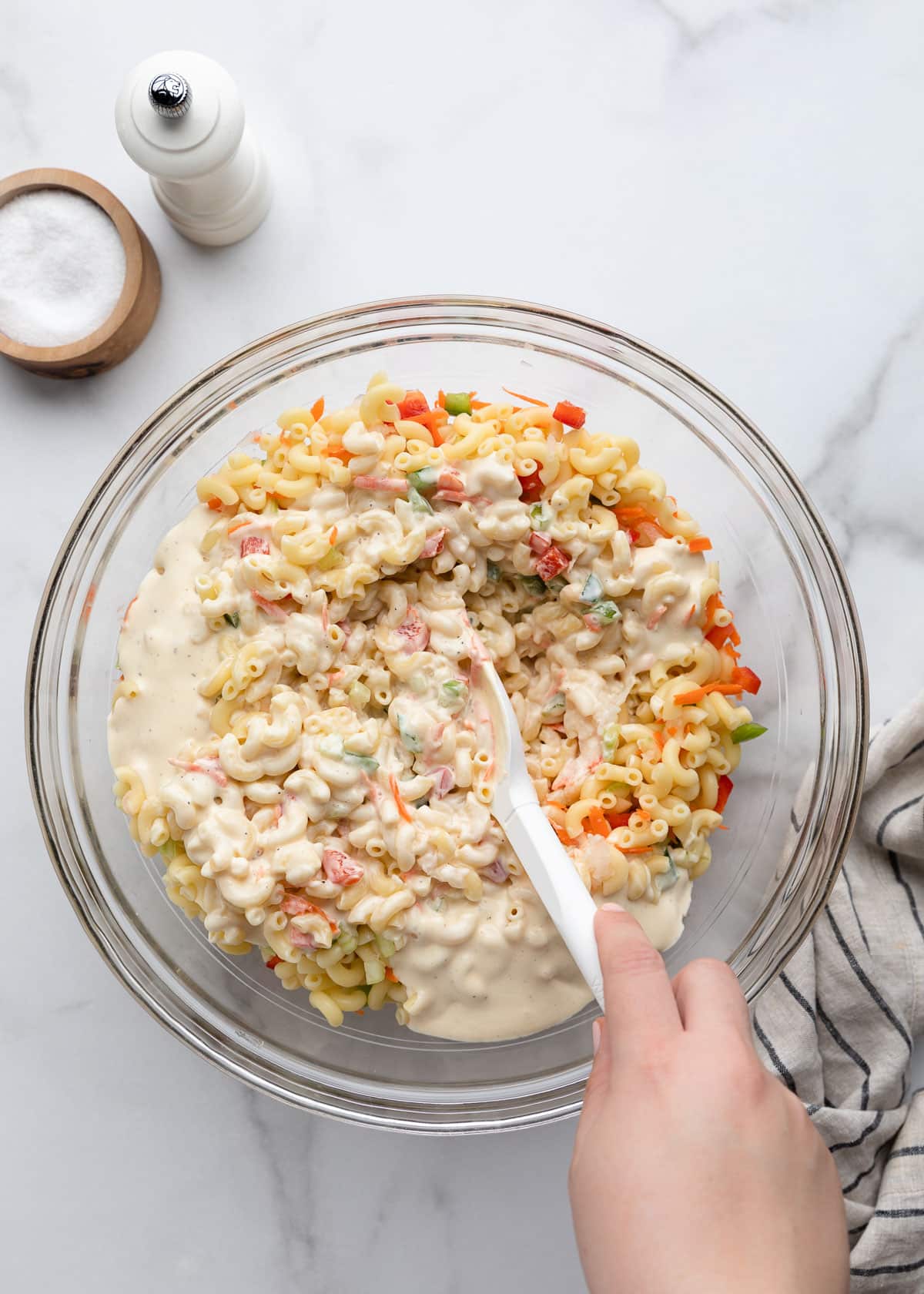
Once the vinegar is fully absorbed into the macaroni, add your prepped vegetables along with two-thirds of the dressing. Fold everything together gently with a rubber spatula until well combined.
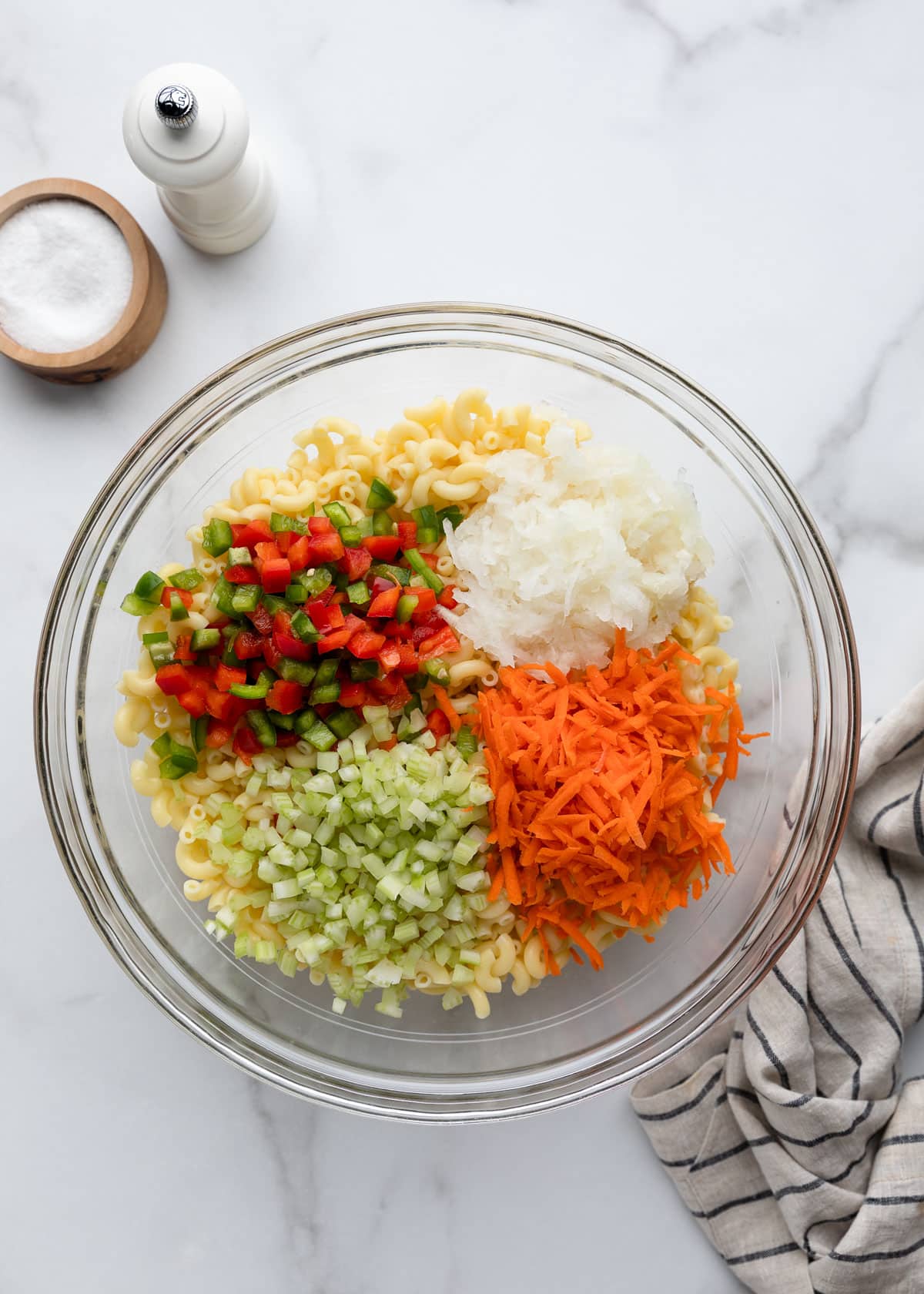
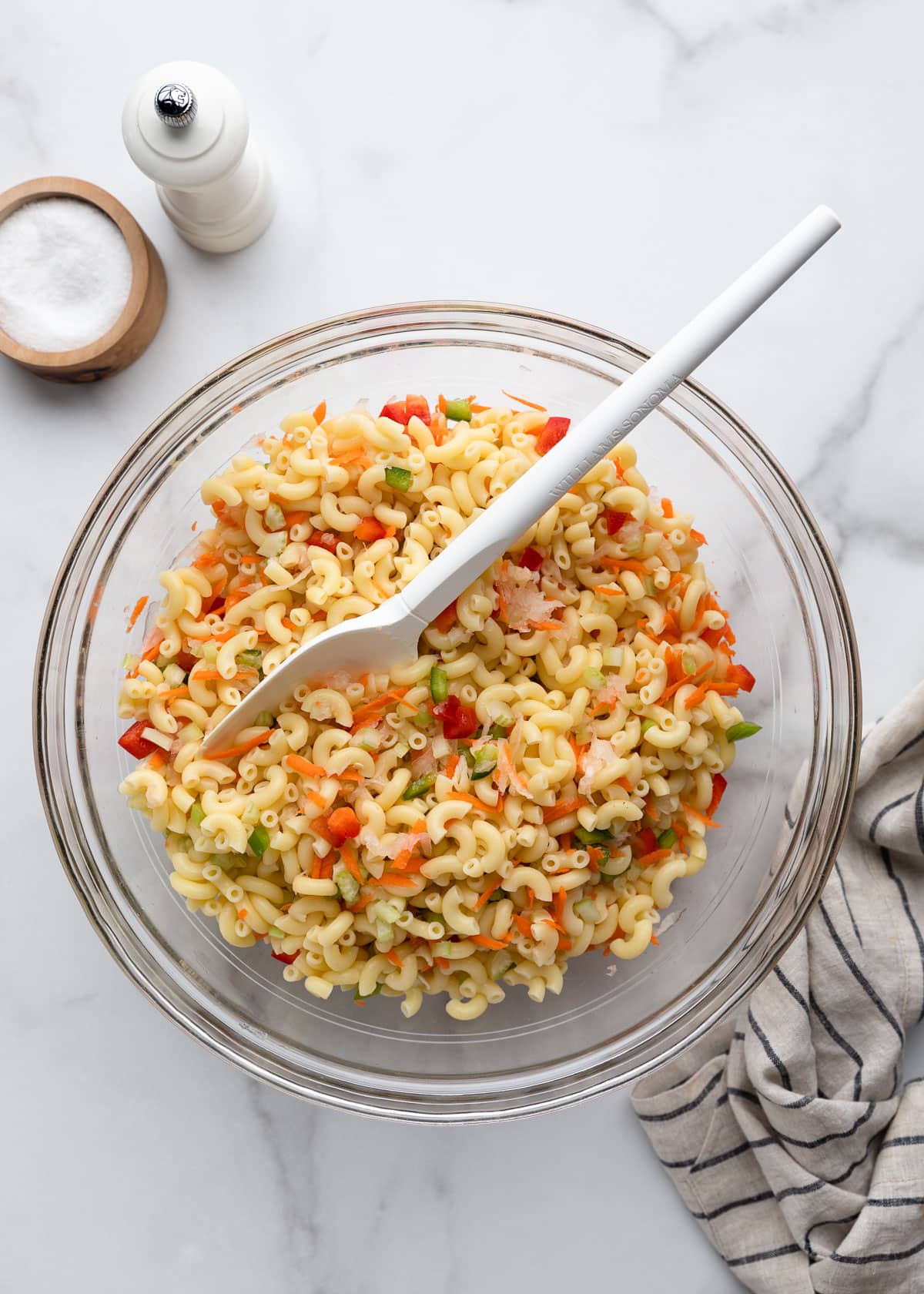
Cover the bowl and refrigerate for 4 hours, until the macaroni salad is completely chilled. Store the rest of the dressing in a covered container in the fridge to add before serving.
Step 4: Finish the Macaroni Salad
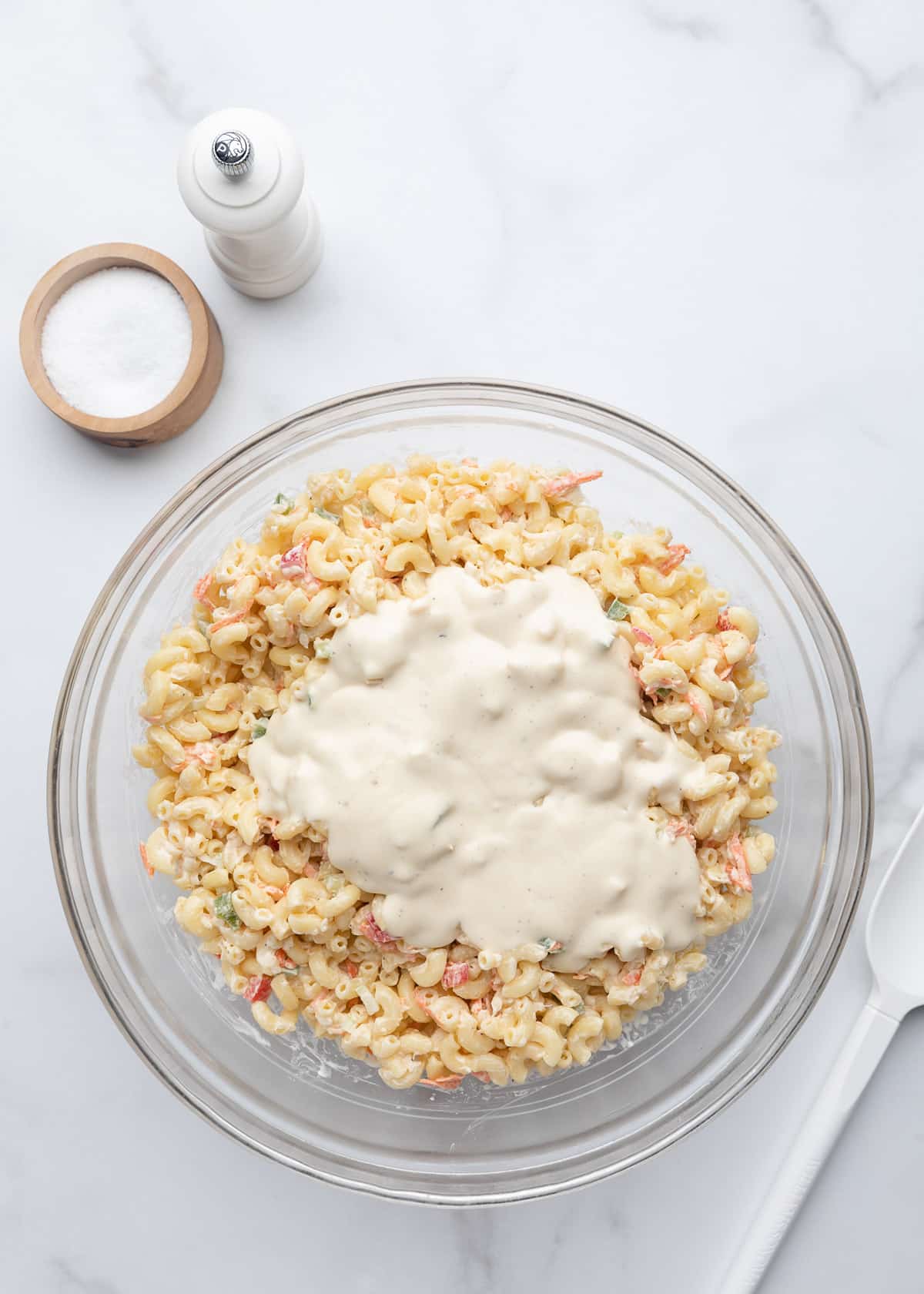
When you pull the salad out of the refrigerator, it will probably look dry — that’s expected. All of that great flavor has soaked into the macaroni while it chilled.
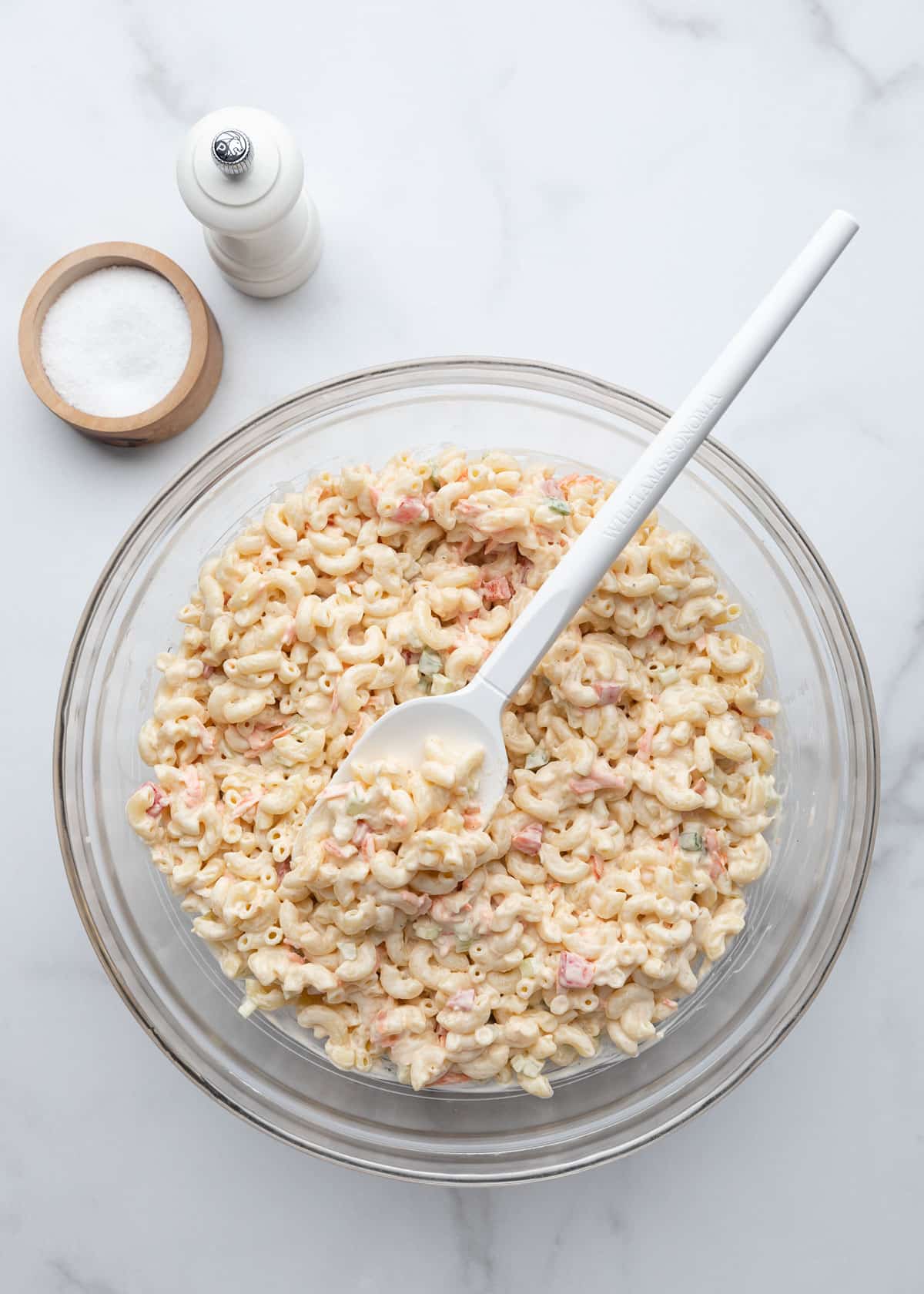
Stir in the reserved dressing until the salad is creamy again, then taste and adjust the seasoning with salt and pepper as needed.
I always use the full amount for a creamy macaroni salad, but if you prefer a lighter coating — or if your macaroni hasn’t absorbed as much as expected (I’ve found that absorption can vary by brand) — add the dressing gradually until it looks right to you.
Be sure to keep any leftover dressing that you haven’t used in the fridge to refresh the salad as it sits or liven up leftovers.
Serving and Storing Macaroni Salad
This macaroni salad is classic for backyard cookouts, picnic tables, and potlucks — anywhere good food gets passed around in big bowls.
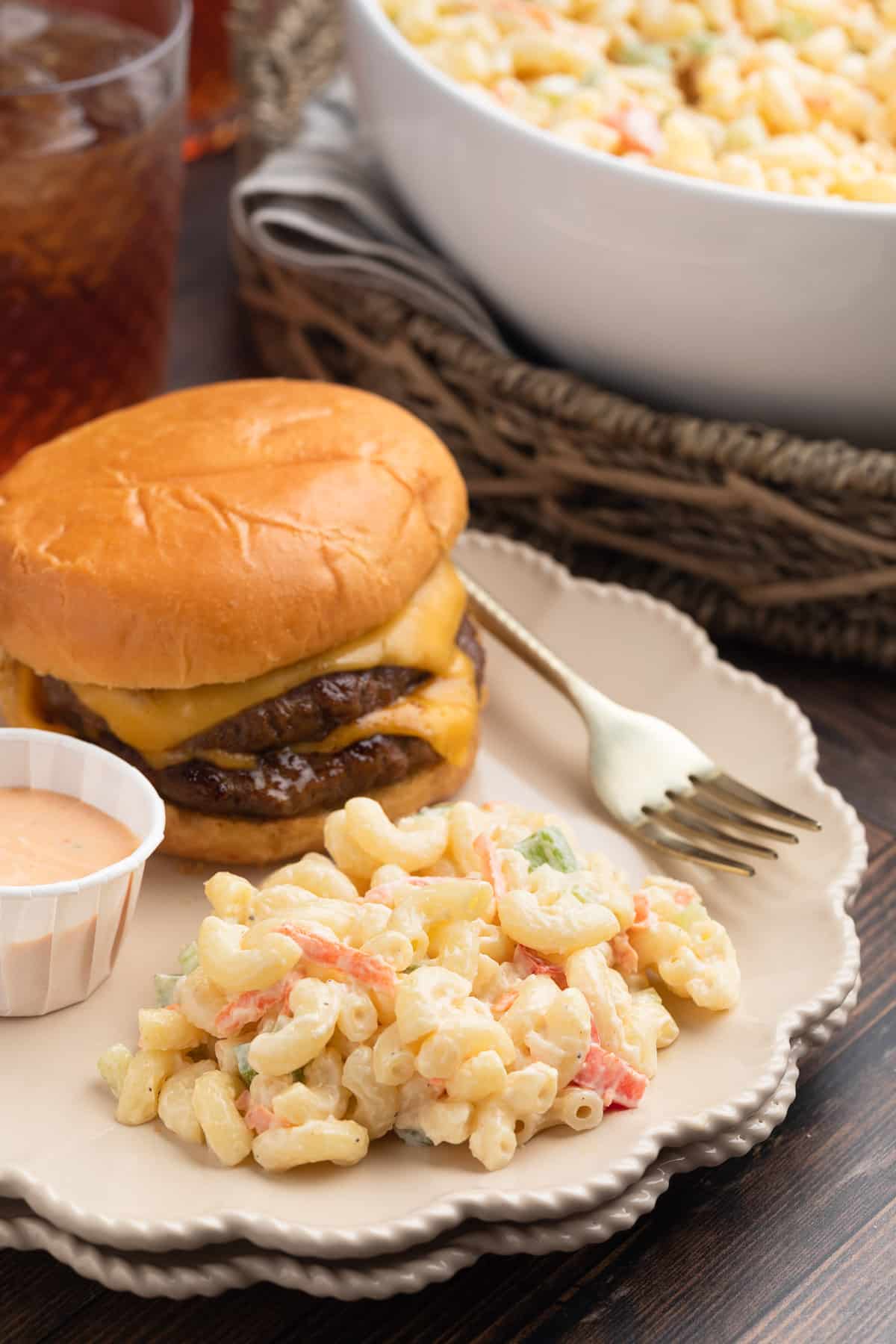
It pairs well with picnic foods and just about anything coming off the grill — burgers, hot dogs, grilled chicken, ribs, or sausages. Round out the spread with coleslaw, corn on the cob, potato salad, or baked beans for a table that has a little something for everyone.
It’s also great alongside deli-style sandwiches or a build-your-own cold cut platter.
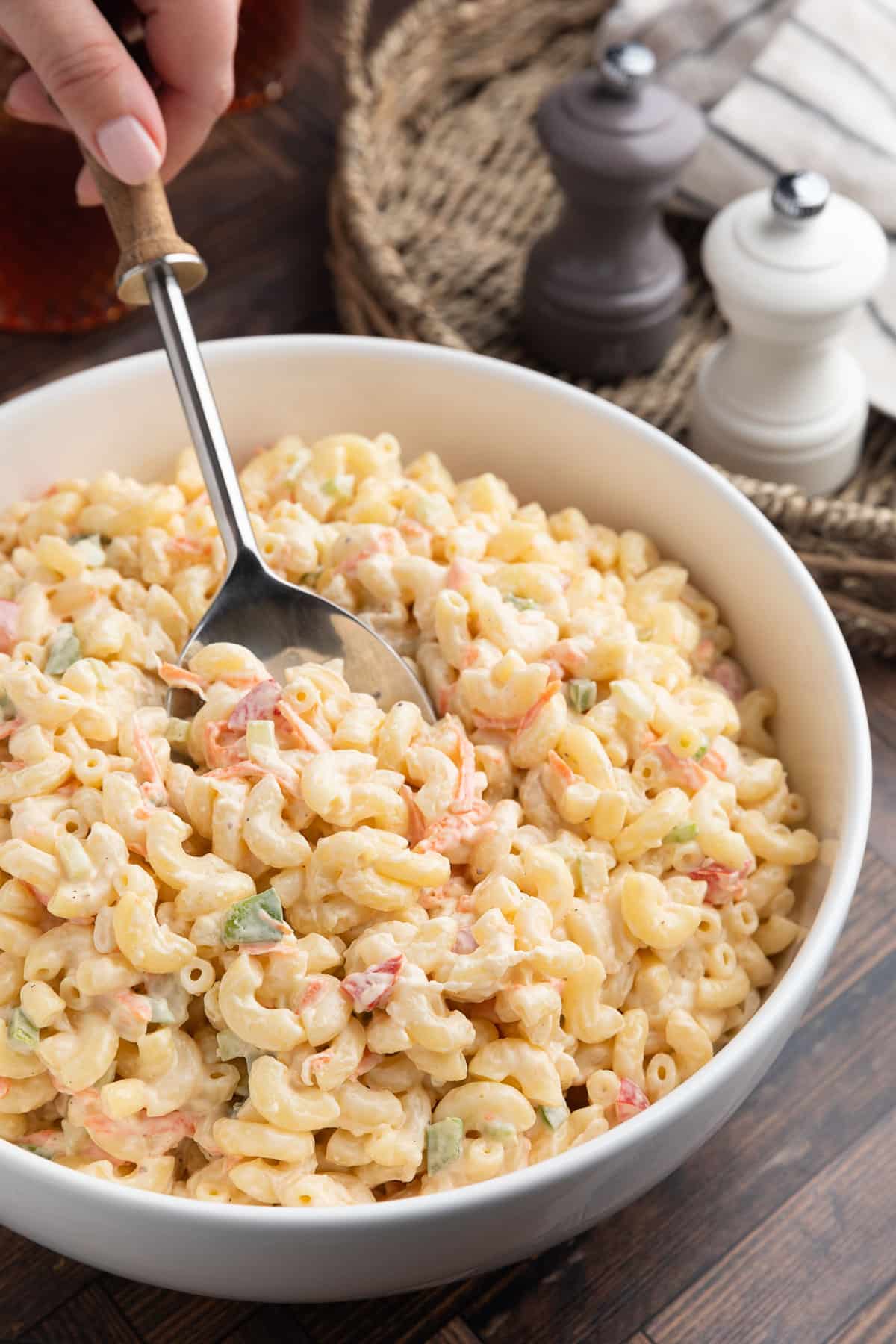
A few tips for serving:
- Serve it well-chilled. Keep the salad in the refrigerator or a cooler until you’re ready to set it out. When entertaining outdoors, a chilled or insulated serving bowl helps keep it cold longer.
- Don’t leave it out too long. Macaroni salad shouldn’t sit at room temperature for more than 2 hours — or 1 hour if the temperature is 90°F or above.
- Storing leftovers. The texture of this macaroni salad is best the day it’s made, but leftovers keep well in an airtight container in the refrigerator for up to 3 days. Do not freeze.
- Give it a stir before serving leftovers. If it looks a little dry after chilling, stir in a small splash of milk to bring it back to the right consistency.
More Salads and Sides for Cookouts
Macaroni Salad
Ingredients
For the Macaroni Salad
- 1 pound uncooked (dry) elbow macaroni (I use De Cecco)
- ¼ cup distilled white vinegar
- ¾ cup seeded and diced bell pepper (¼ inch dice, see Note 1)
- ½ cup finely diced celery (see Note 2)
- ½ cup grated carrot (see Note 3)
- ½ cup grated Vidalia onion (see Note 3)
For the Dressing
- 2 cups mayonnaise (I use Hellmann's, see Note 4)
- ¾ cup whole milk
- 2 tablespoons Dijon mustard (I use Maille)
- 2 to 4 tablespoons granulated sugar (see Note 5)
- 1 teaspoon Diamond Crystal kosher salt , plus additional to taste
- ½ teaspoon freshly-ground black pepper , plus additional to taste
- ½ teaspoon granulated garlic powder
Instructions
- Bring a large pot of well-salted water to a boil. Cook the macaroni until it's soft, a few minutes past al dente. The pasta should be tender and slightly overcooked, but not so soft that it's mushy and falling apart. Cooking times can vary by brand. Drain well and do not rinse.
- Transfer the hot macaroni to a large bowl. Pour in the vinegar and fold gently with a rubber spatula until every piece is coated. Let it sit for 10 to 15 minutes, stirring gently two or three times, until the vinegar is fully absorbed and the pasta has cooled down a bit.
- While the pasta is soaking in the vinegar, whisk together the mayonnaise, whole milk, Dijon mustard, sugar, kosher salt, pepper, and garlic powder in a separate bowl until smooth. Set aside.
- When the vinegar has absorbed into the pasta, add the bell peppers, celery, carrots, and onion to the macaroni, along with ⅔ of the dressing (see Note 6). Fold gently with a rubber spatula until well combined.
- Cover and refrigerate for 4 hours, until completely chilled. Store the remaining dressing in a separate covered container in the refrigerator.
- When ready to serve, stir in the reserved dressing until the salad is creamy. I always use the full amount, but you can add it gradually if you prefer a lighter coating — absorption can vary by pasta brand. Taste and adjust seasoning with salt and pepper as needed.
- Serve chilled with your favorite sandwiches, picnic, or BBQ fare.
Notes
Nutrition Estimate
Nutrition information is automatically calculated, so should only be used as an approximation.
Please note that our recipes have been developed using the US Customary measurement system and have not been tested for high altitude/elevation cooking and baking.