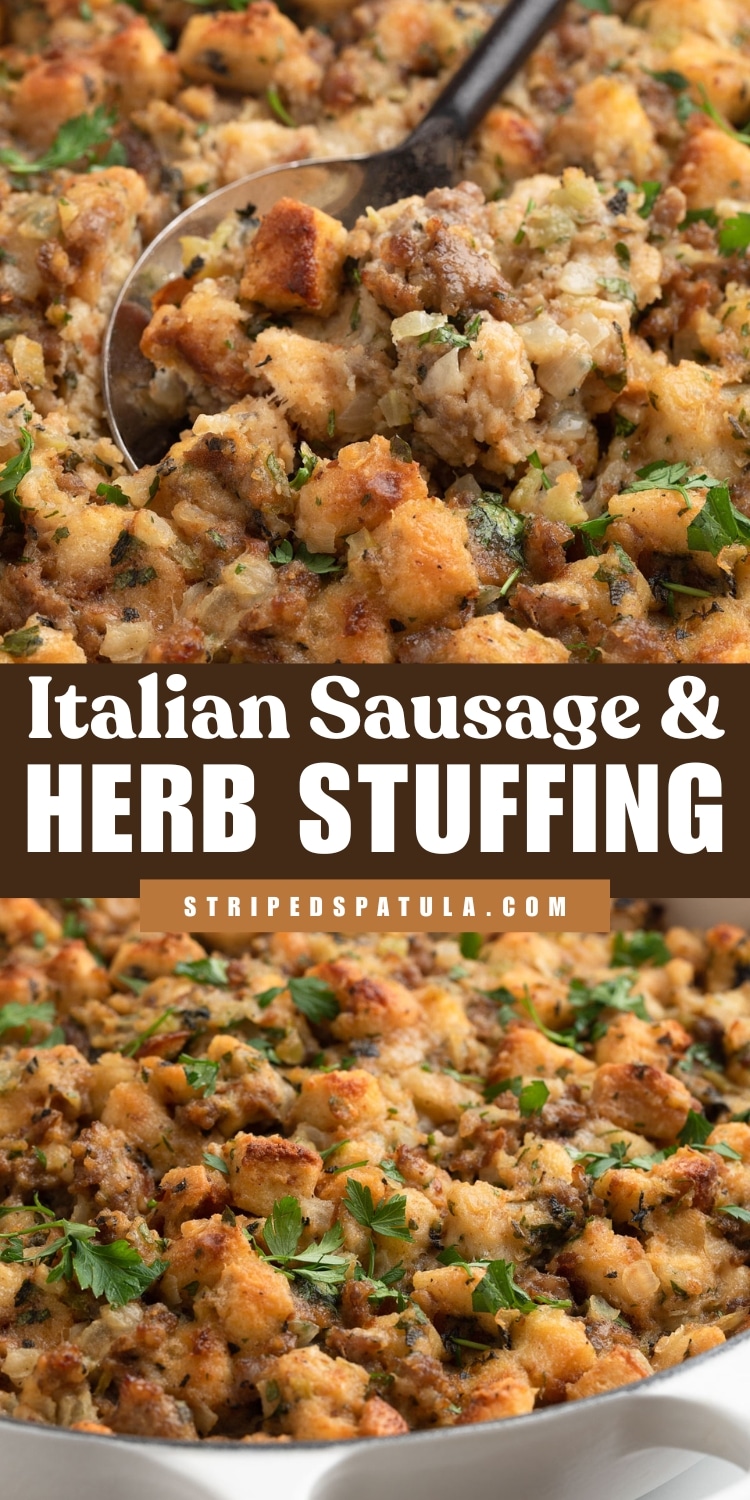
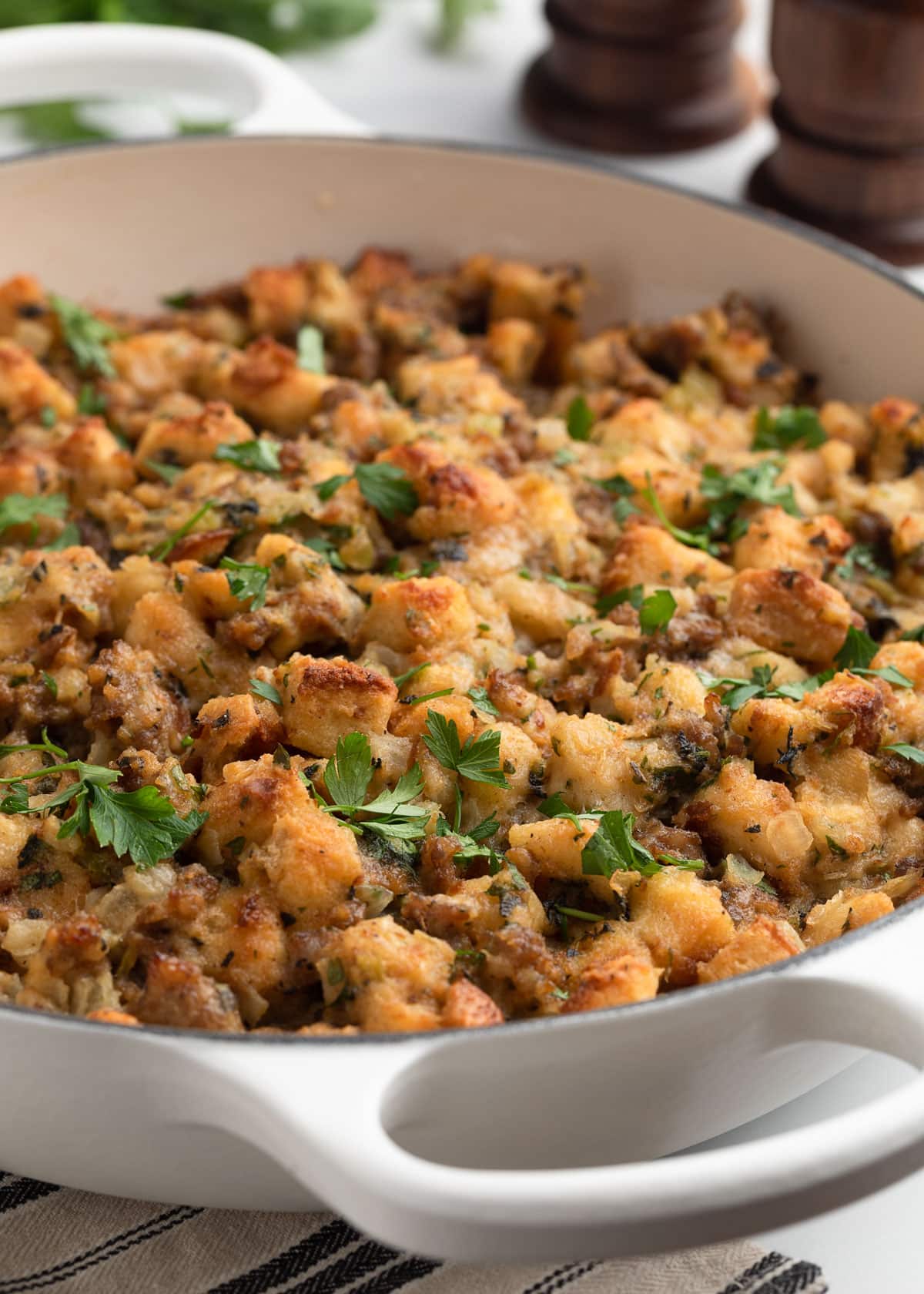
I love rotating different stuffing (dressing) variations onto my Thanksgiving menu (and often make more than one!), but my family recipe for Italian Sausage Stuffing is always requested. Savory sausage, Parmigiano Reggiano, and fresh herbs make it rich, comforting, and a perfect match for turkey.
Looking for more stuffing inspiration? Try my Traditional Bread Stuffing with Herbs, Cranberry-Pecan Stuffing (made with white and wheat breads), or Sausage and Chestnut Stuffing (with a cornbread–white bread blend).
Before You Start Cooking
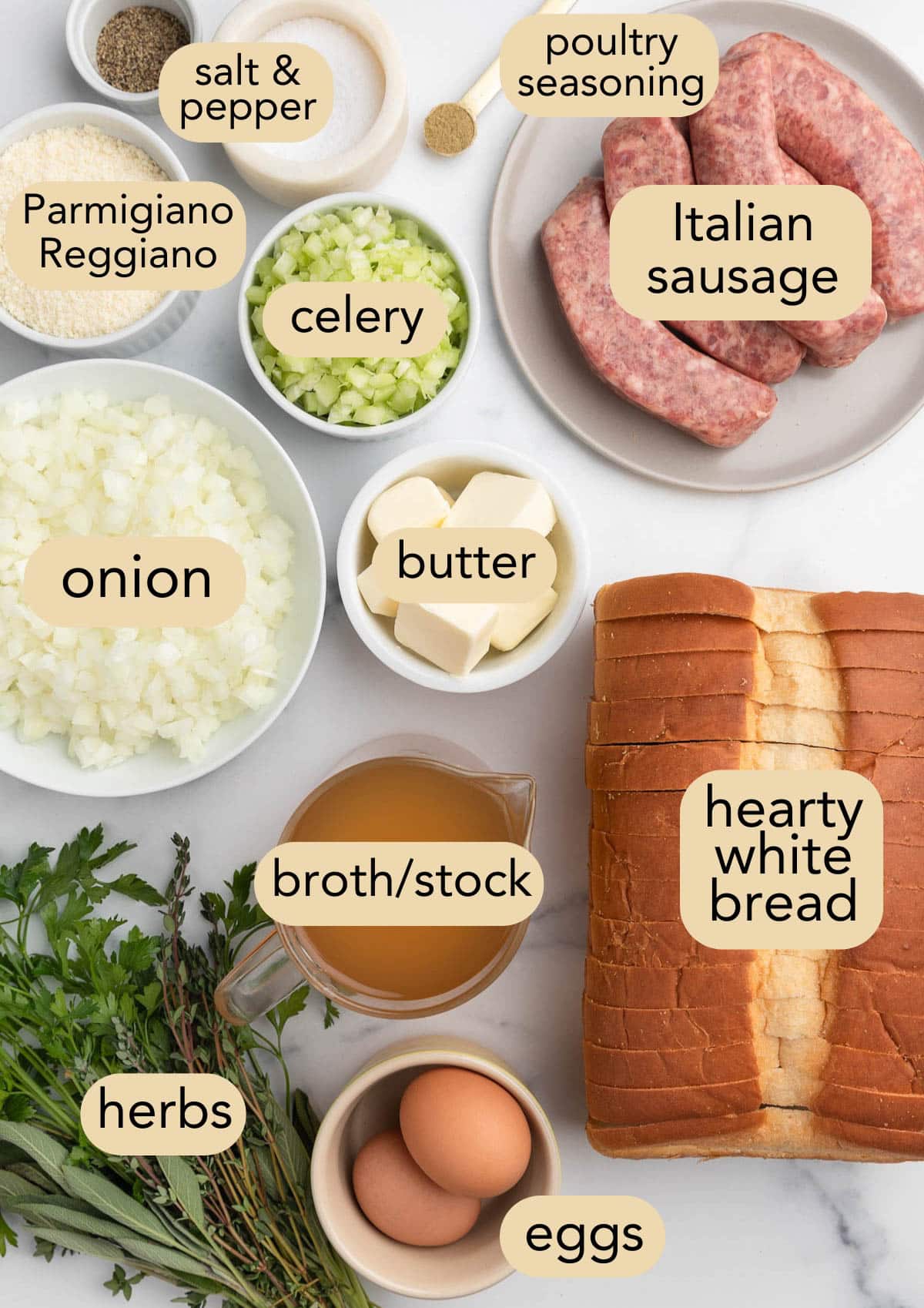
- Bread: You’ll need a 1½-pound (24-ounce) loaf of hearty white bread. Over the years, I’ve found that brands like Arnold Country White and Pepperidge Farm Farmhouse White sandwich bread create consistently fluffy stuffing. Use the full loaf—crusts and ends included. If you’re using bread with a hard crust, trim it off.
- Plan Ahead: Drying the bread cubes in the oven takes some time, so I like to prep this step up to 5 days before the holiday. Once the croutons are completely cool, store them in an airtight container at room temperature.
- Broth/Stock: I use my Make-Ahead Turkey Stock here—it has a rich flavor and a neutral salt level, allowing you to better control the overall seasoning. Store-bought low-sodium chicken or turkey broth also works well.
- Sausage: Sweet Italian sausage with fennel is my go-to. If you prefer heat, use hot Italian sausage or a mix of sweet and hot. House-made sausage from an Italian market is always delicious if you have access to it.
How to Make Italian Sausage Stuffing
Step 1: Make the Croutons
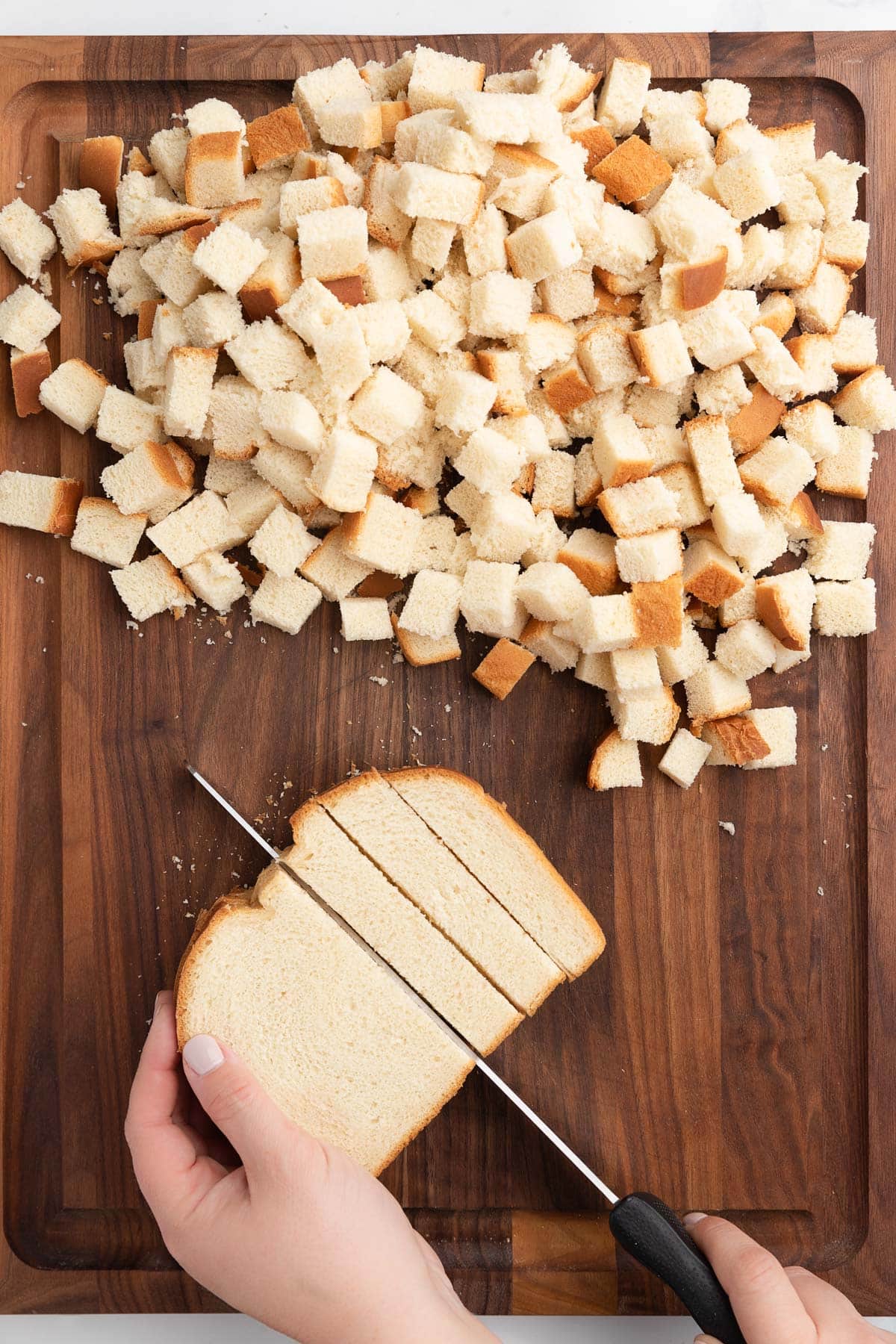
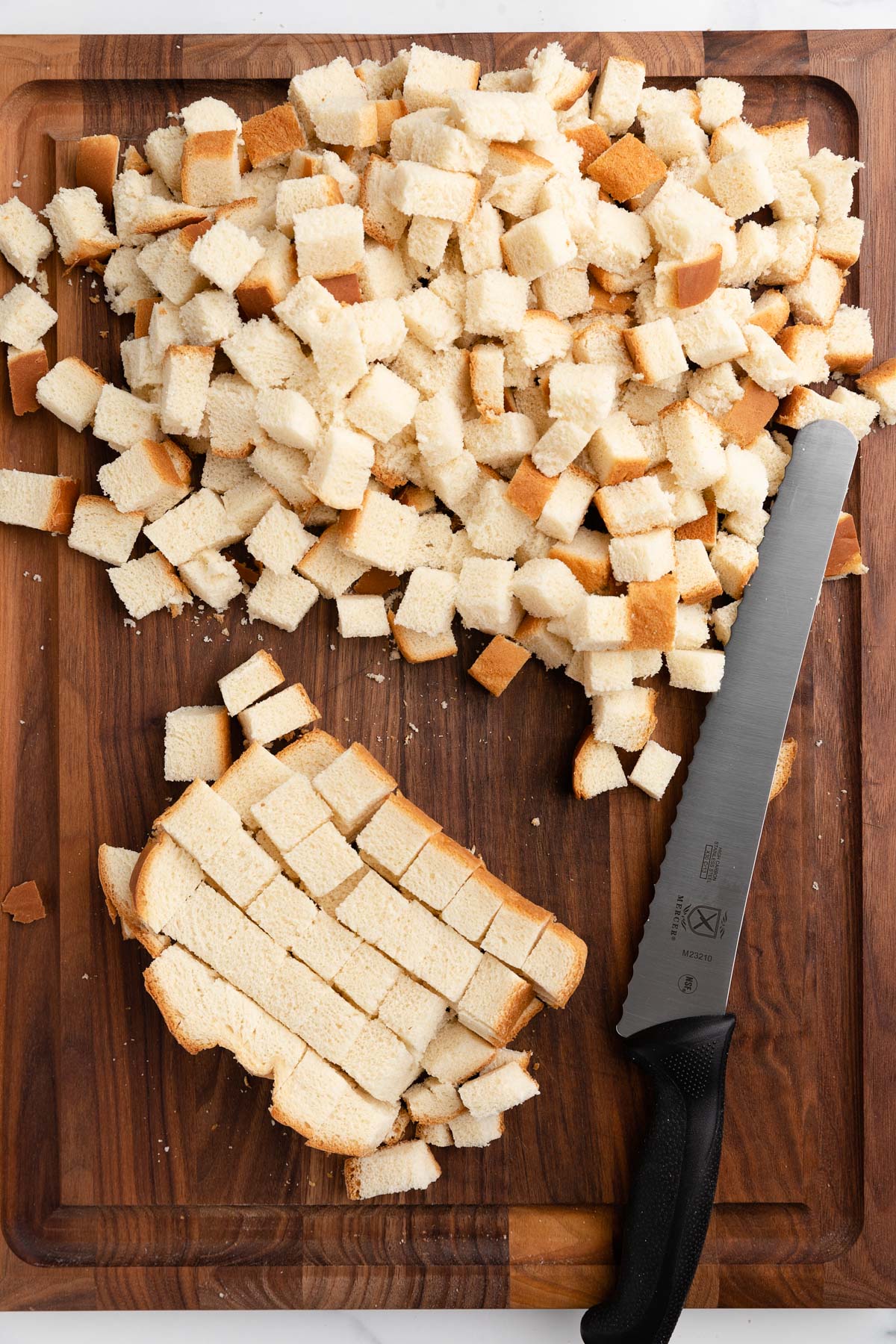
Slice the bread into ½- to ¾-inch cubes. A serrated knife works best, and stacking a few slices at a time makes the process go faster.
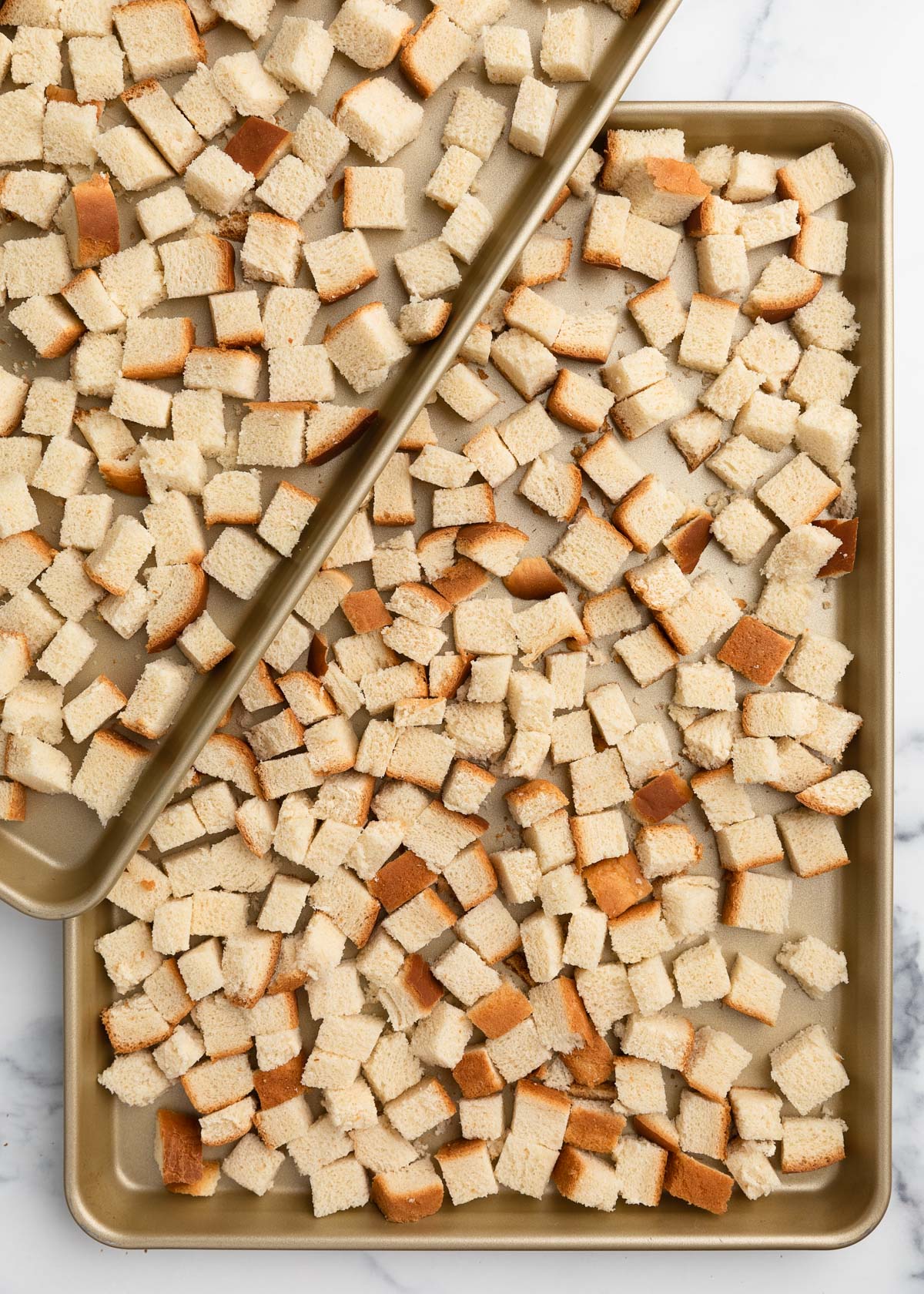
Spread the bread cubes into a single layer on two rimmed half-sheet pans and bake at 250°F for 50–60 minutes, stirring and rotating the pans halfway through.
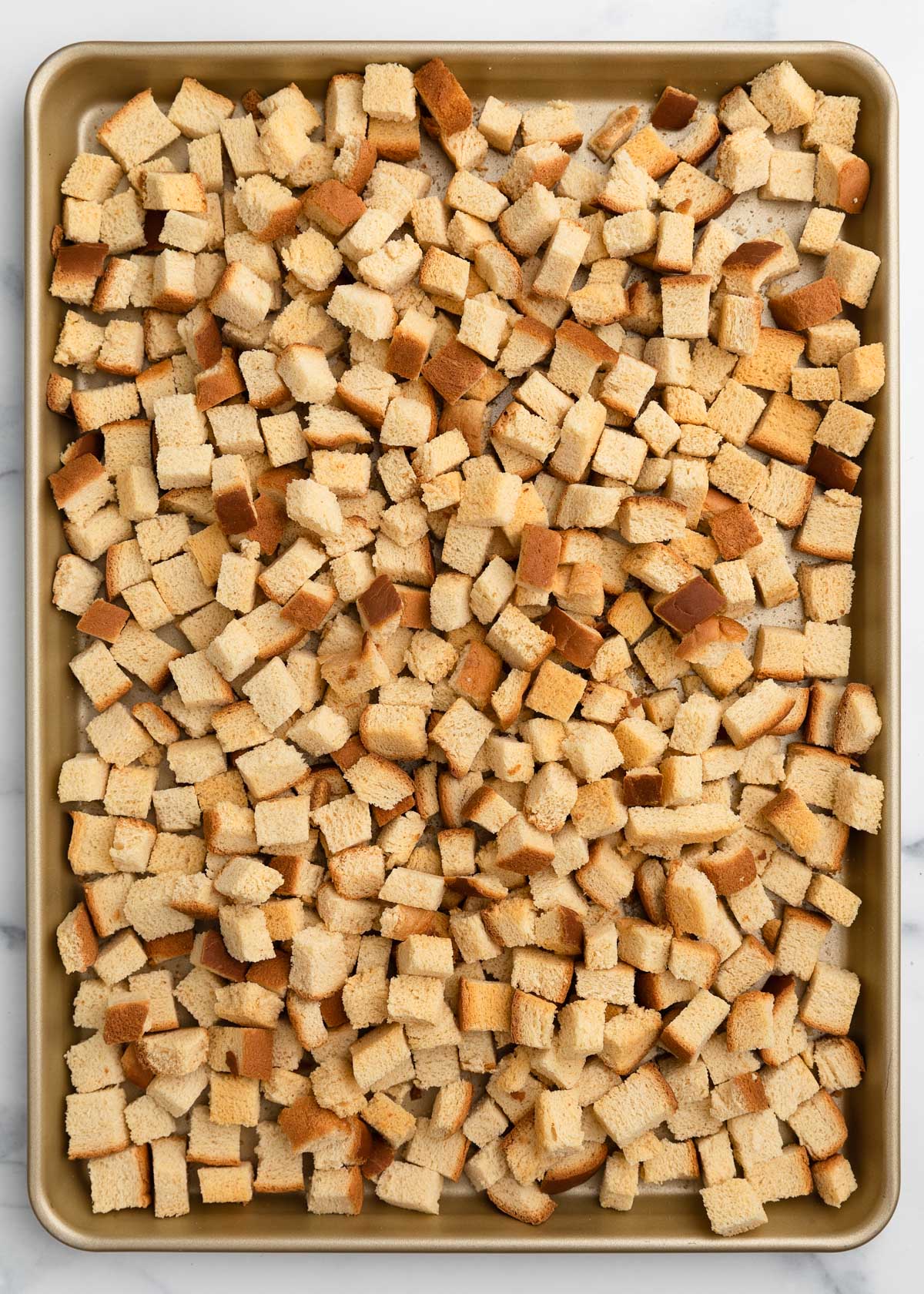
You’re looking for cubes that are completely dried out with just the slightest hint of color. Let the croutons cool completely at room temperature.
Step 2: Prep Stuffing Add-Ins
- Aromatics. Dice the celery and onions into a ¼-inch dice so they soften evenly as they cook. I usually run a vegetable peeler down the outside of the celery first to remove the tougher strings that can stay firm in the finished stuffing. Finely chop your fresh herbs: sage, thyme, and flat-leaf parsley.
- Parmesan. Finely grate Parmigiano Reggiano from a wedge for the best flavor and texture. Its nutty, salty flavor is one of the elements that makes this stuffing so special.
- Sausage. If you’re using link Italian sausage (instead of loose/bulk sausage), remove the casings by making a shallow slit lengthwise and peeling them off.
- Broth or Stock. If using homemade turkey stock that you’ve frozen, make sure it’s fully thawed. Chilled homemade stock naturally gels, so warm it gently until fluid and pourable. Store-bought broth can be used at room temperature.
Step 3: Cook the Sausage and Vegetables
Set a large nonstick skillet or sauté pan over medium-high heat and melt 2 tablespoons butter. Add the sausage and break it into bite-sized crumbles with a wooden spoon as it cooks. You want it nicely browned and fully cooked through—this deepens the flavor of the finished stuffing.
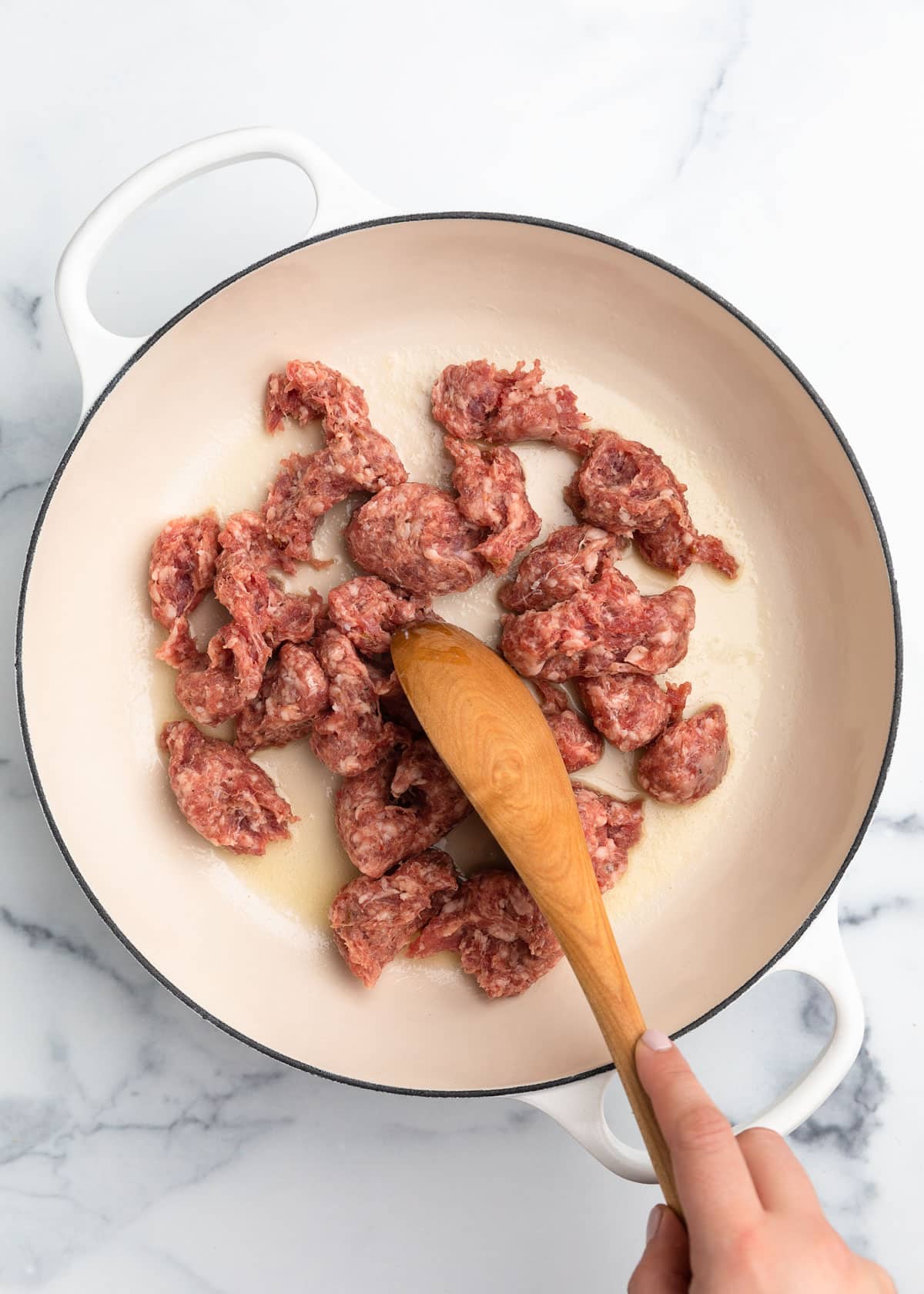
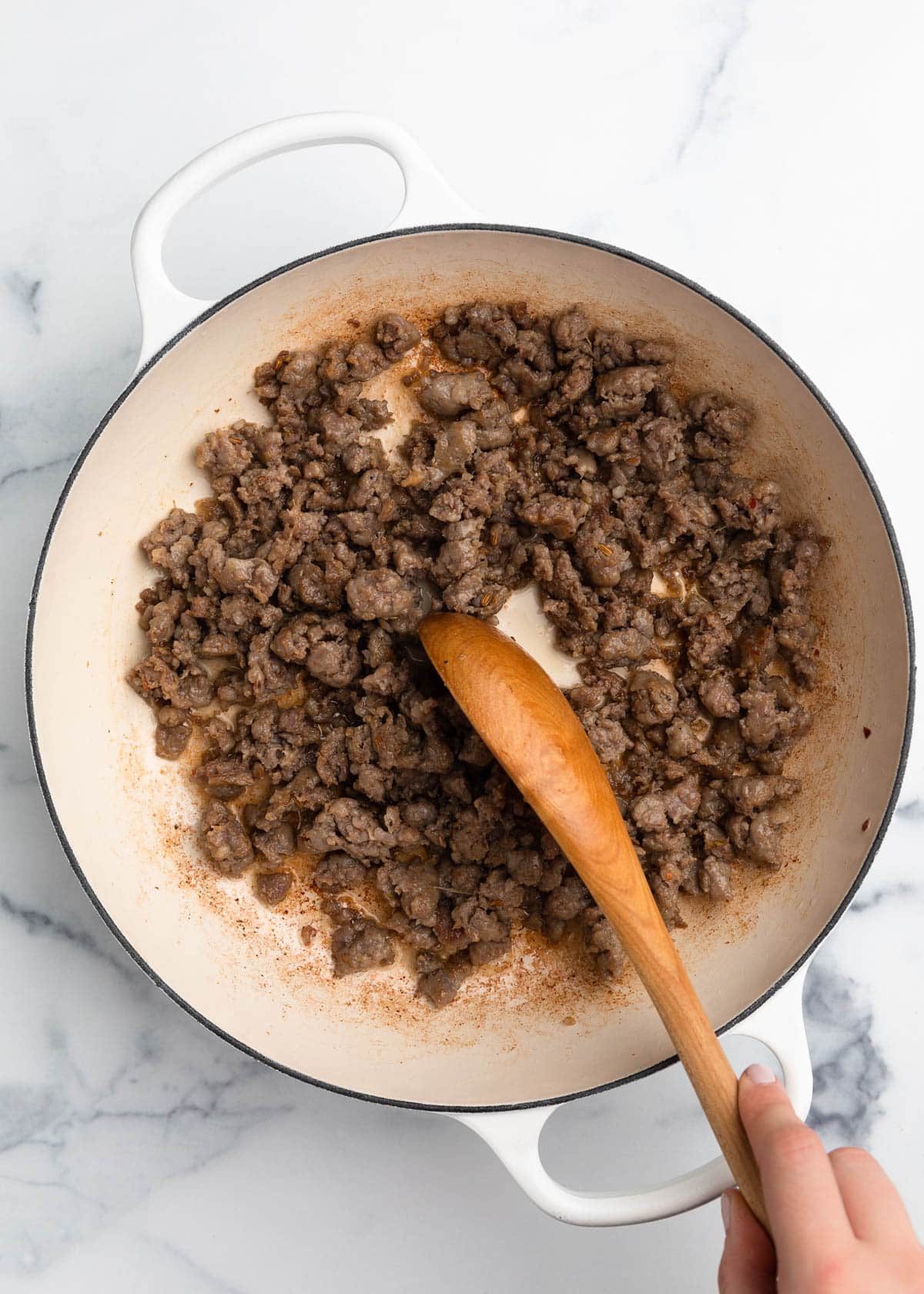
When the sausage is ready, scoop it into a large mixing bowl with a slotted spoon, leaving the flavorful drippings behind in the skillet.
Add another 6 tablespoons of butter to the pan (the best stuffing is a buttery stuffing!). Once it melts, stir in the diced celery and onions. Let them cook over medium heat for 8 to 10 minutes, just until they soften.
You’re not looking for color here; tender vegetables meld more naturally into the stuffing and help carry the flavors of the herbs.

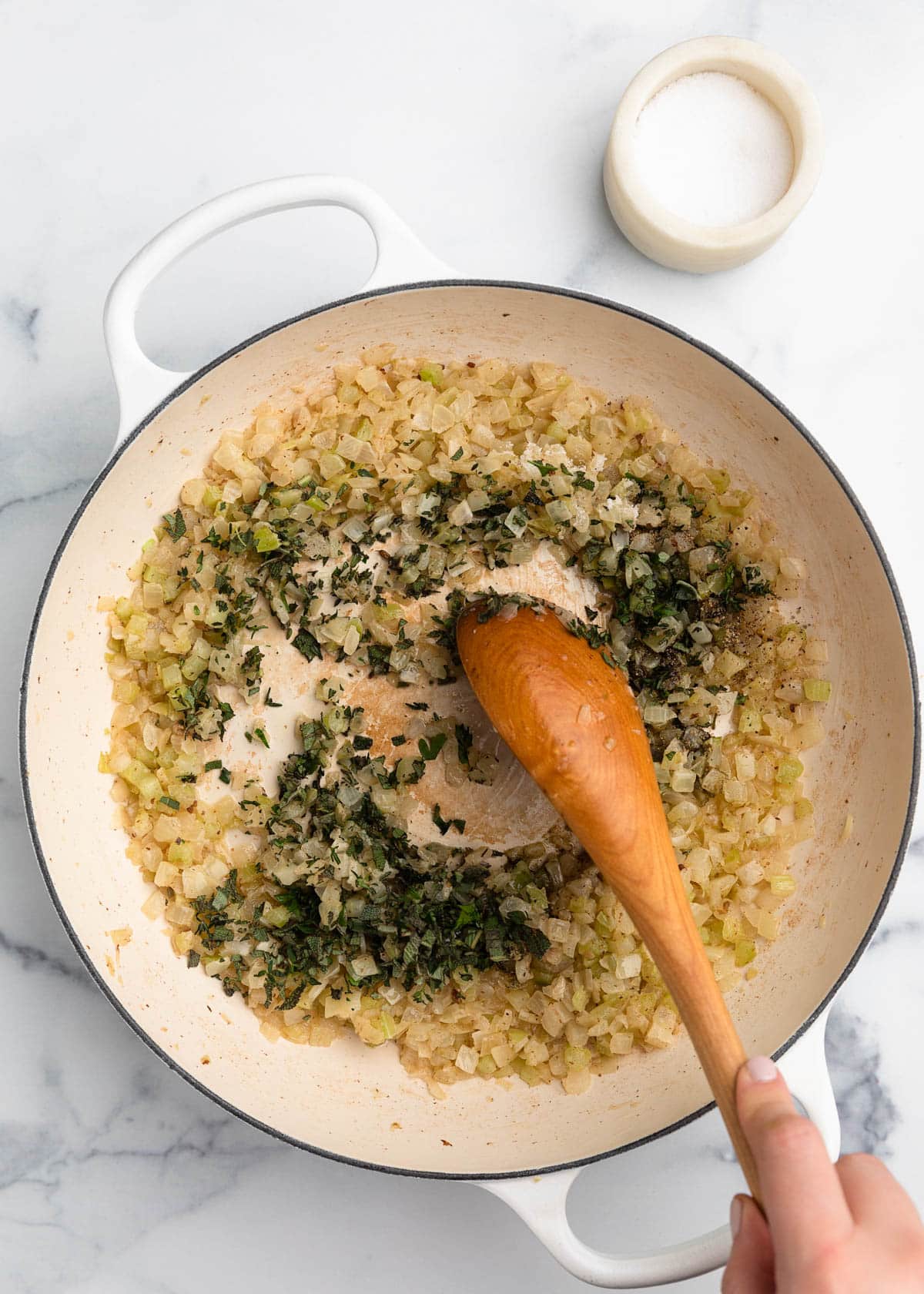
Sprinkle in the chopped sage and thyme, along with a bit of poultry seasoning, salt, and pepper. I always use Bell’s Seasoning—it’s salt-free and does a beautiful job of boosting the flavor of the fresh herbs without overpowering the dish.
Let everything cook for another minute or two, just long enough for the herbs to become fragrant. (The kitchen should smell like Thanksgiving at this point!)
Step 4: Assemble the Stuffing
Add the cooled croutons to the bowl with the cooked sausage, and pour the sautéed vegetables over the top—don’t forget to scrape in every last bit of that herb-infused butter from the pan!
Add the chopped fresh parsley and grated Parmigiano Reggiano, and give the mixture a gentle toss to distribute everything evenly.
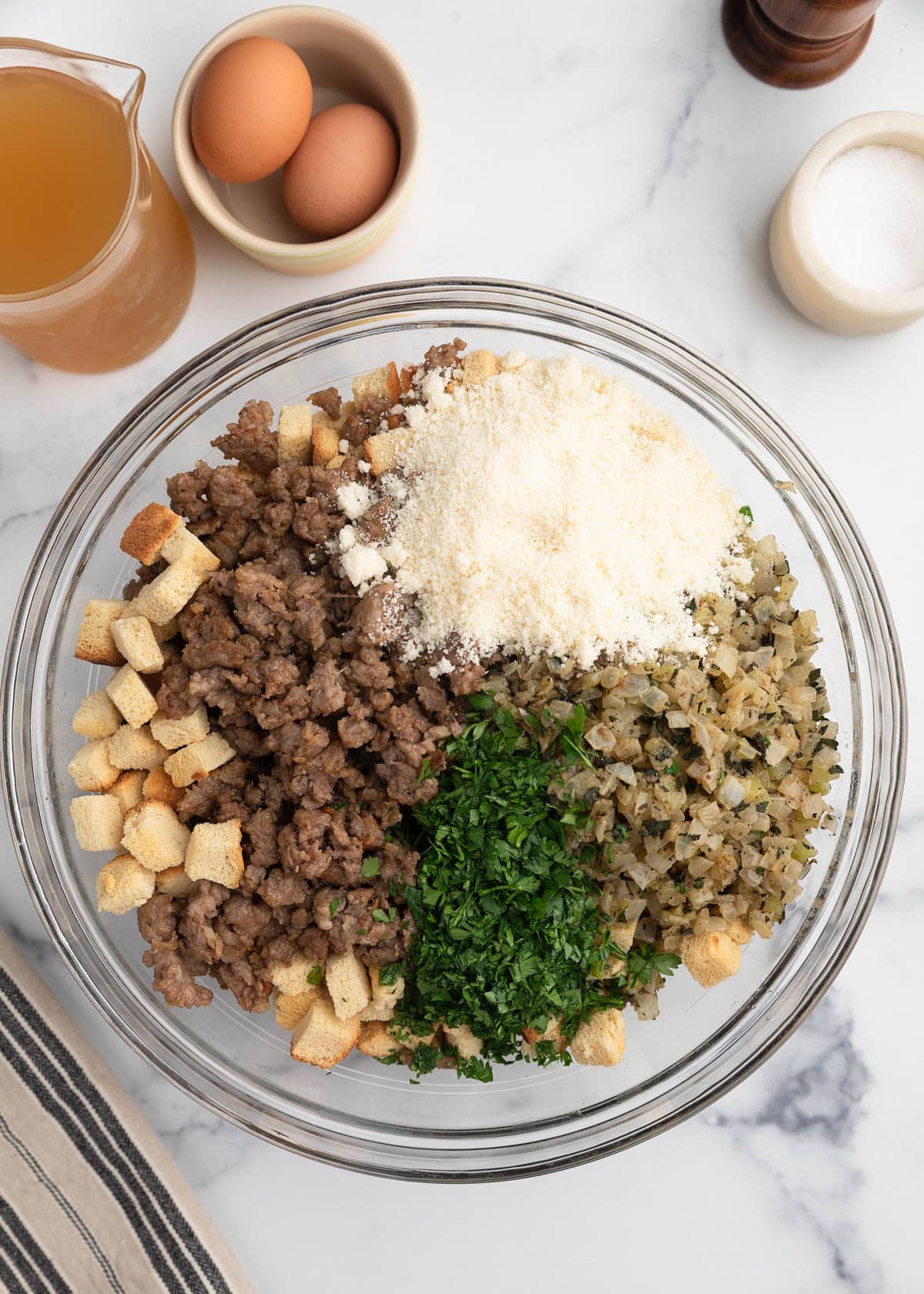
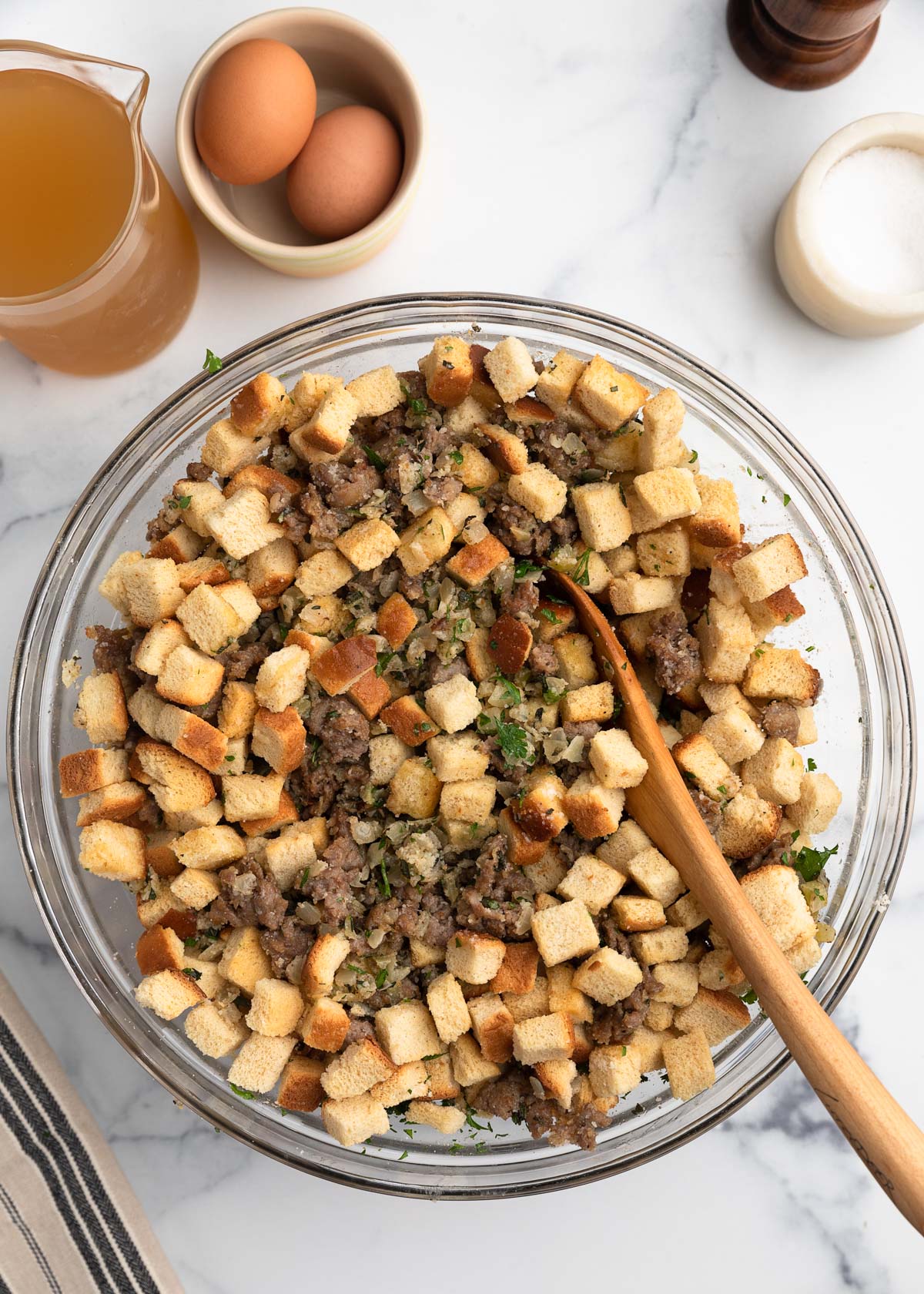
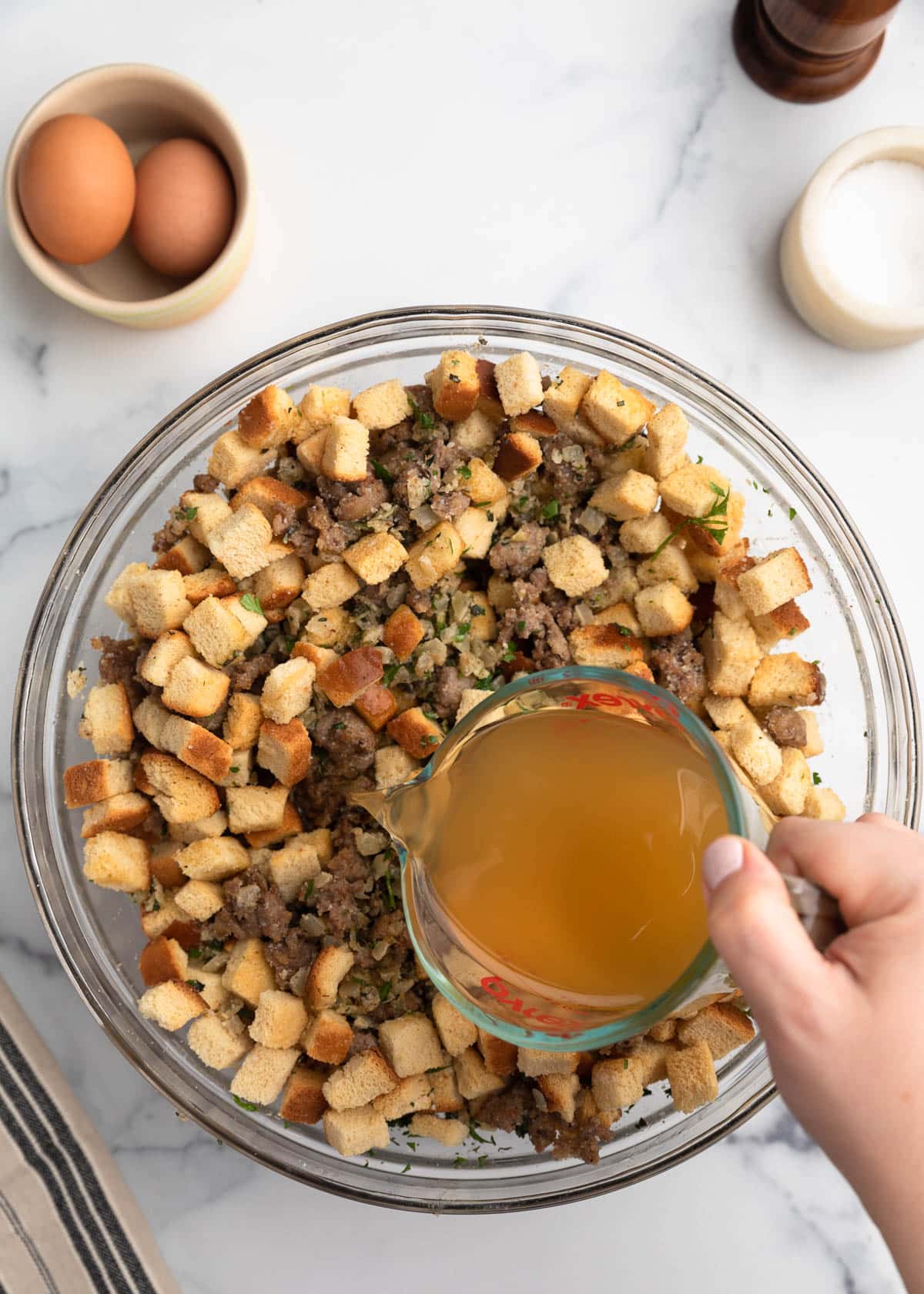
Now it’s time to add the broth. Start by pouring in 1¾ cups, then mix well and let the bread sit for a few minutes so it can begin soaking up the liquid. Give the mixture a taste and adjust the seasoning if you need to; once the eggs go in, you won’t be able to taste it again until after it’s baked.
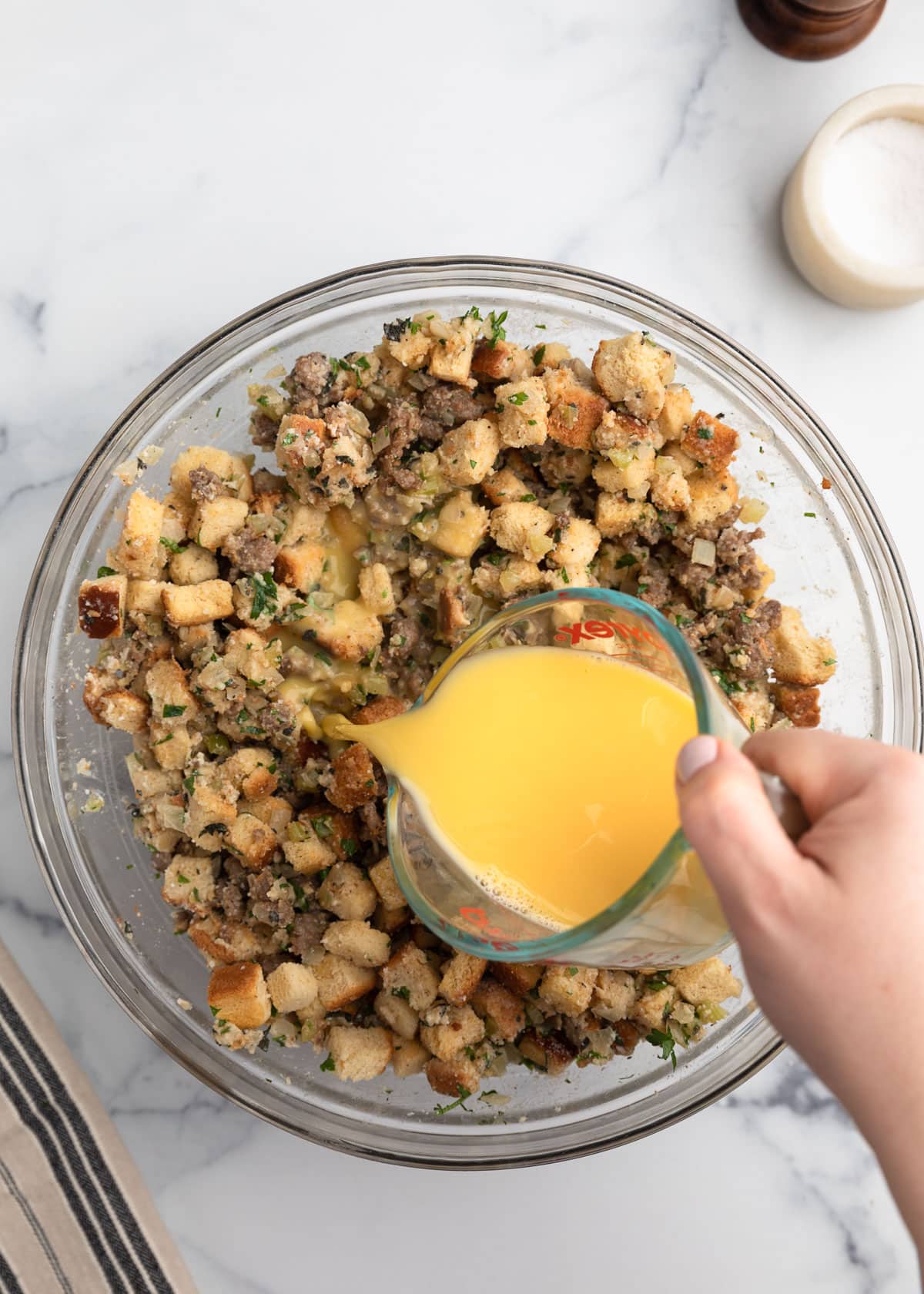
Whisk the eggs with ½ cup additional broth, then drizzle the mixture over the stuffing and toss again. Let it rest briefly so the bread can absorb this second addition of liquid.
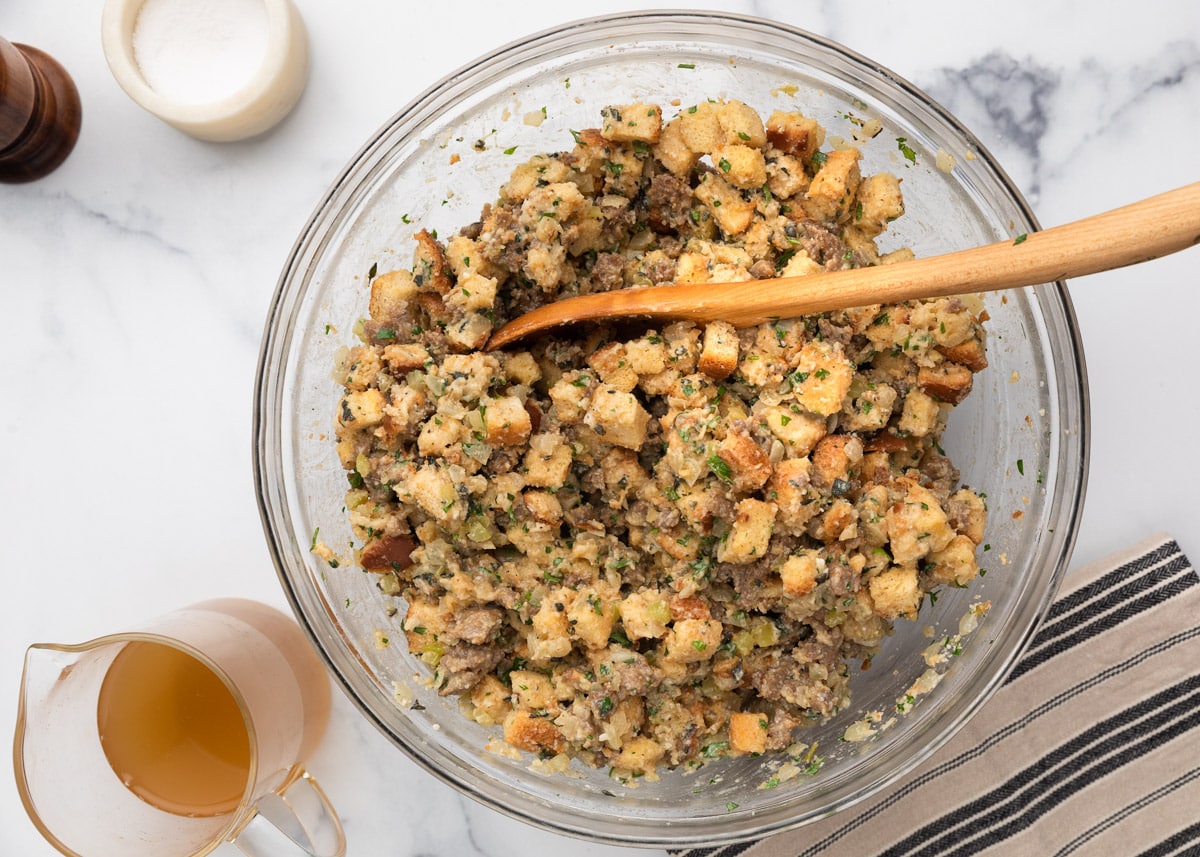
To check whether you’re in the right place moisture-wise, pick up a crouton and gently press it between your fingers. It should feel evenly moistened but still hold its shape—not soggy or collapsing.
If the mixture feels dry, add more broth gradually, pausing after each splash so the bread has a chance to take it in. Every loaf behaves a little differently here, so trust what you see and feel.
Step 5: Bake the Stuffing
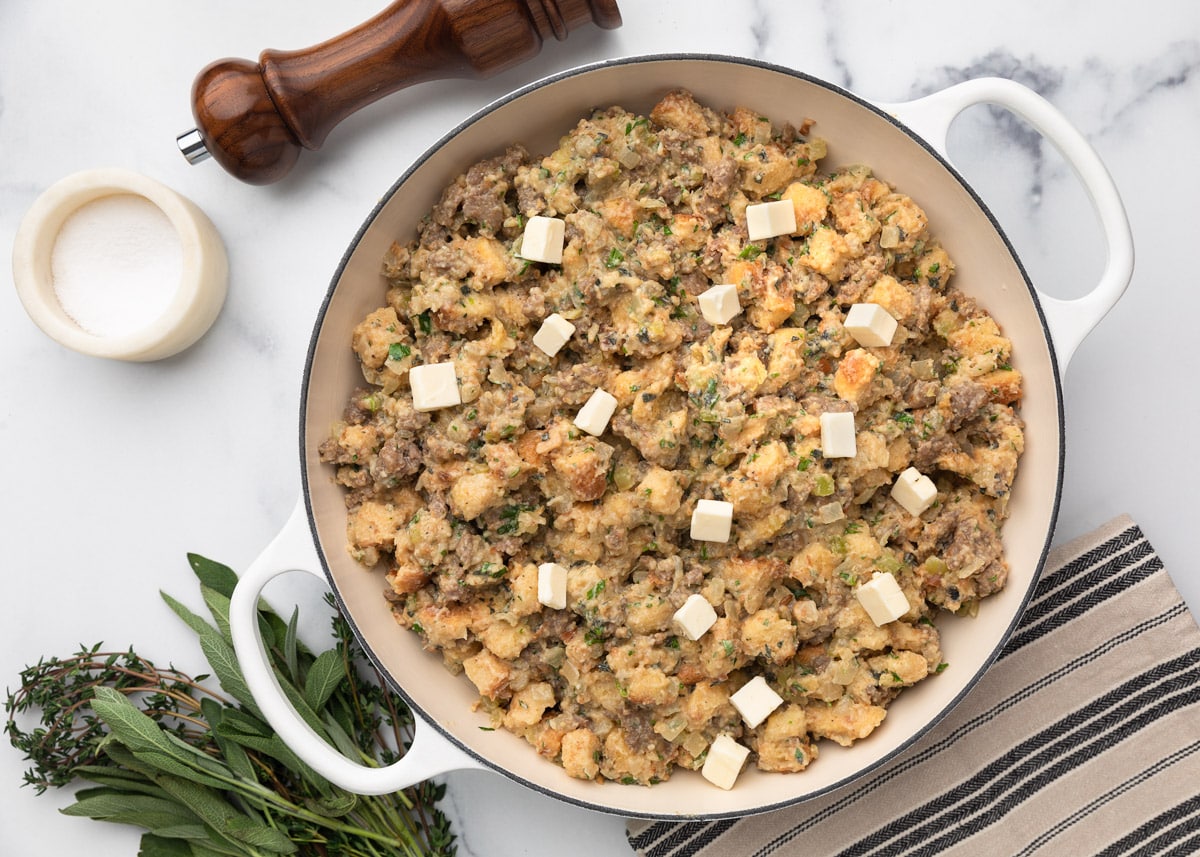
Transfer the stuffing mixture to a buttered 3-quart gratin dish or 13×9 baking dish, spreading it into an even layer. You don’t have to pack it tightly—leaving it a little loose helps those delicious edges crisp up in the oven.
Cut the remaining 2 tablespoons of butter into small pieces and scatter them across the top. This adds richness and helps the stuffing bake with a golden, lightly crisped surface.
Cover the dish snugly with foil and place it in a preheated 375°F oven. Bake for 30 minutes, then remove the foil and let it continue baking for another 15–20 minutes. You’re looking for a top that’s deeply golden in spots with crisp edges, and a center that registers 165°F.
When the stuffing comes out of the oven, let it rest for about 10 minutes. This quick pause helps the interior set just enough so it’s easily scoopable.
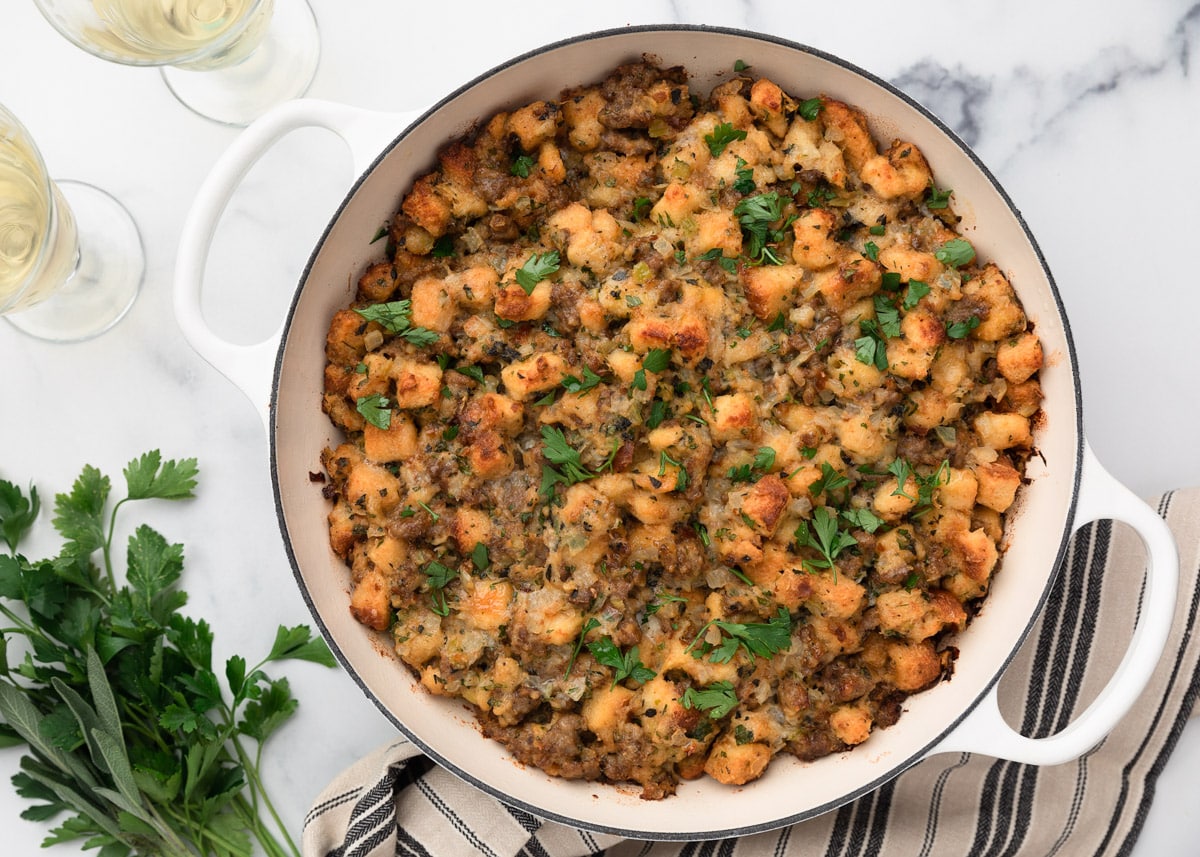
Serving Italian Sausage Stuffing
Just before serving, I like to sprinkle a little extra chopped parsley over the top for color. Pair this stuffing with roasted turkey (it’s wonderful with my Herb Roasted Turkey Breast) or even roasted chicken.
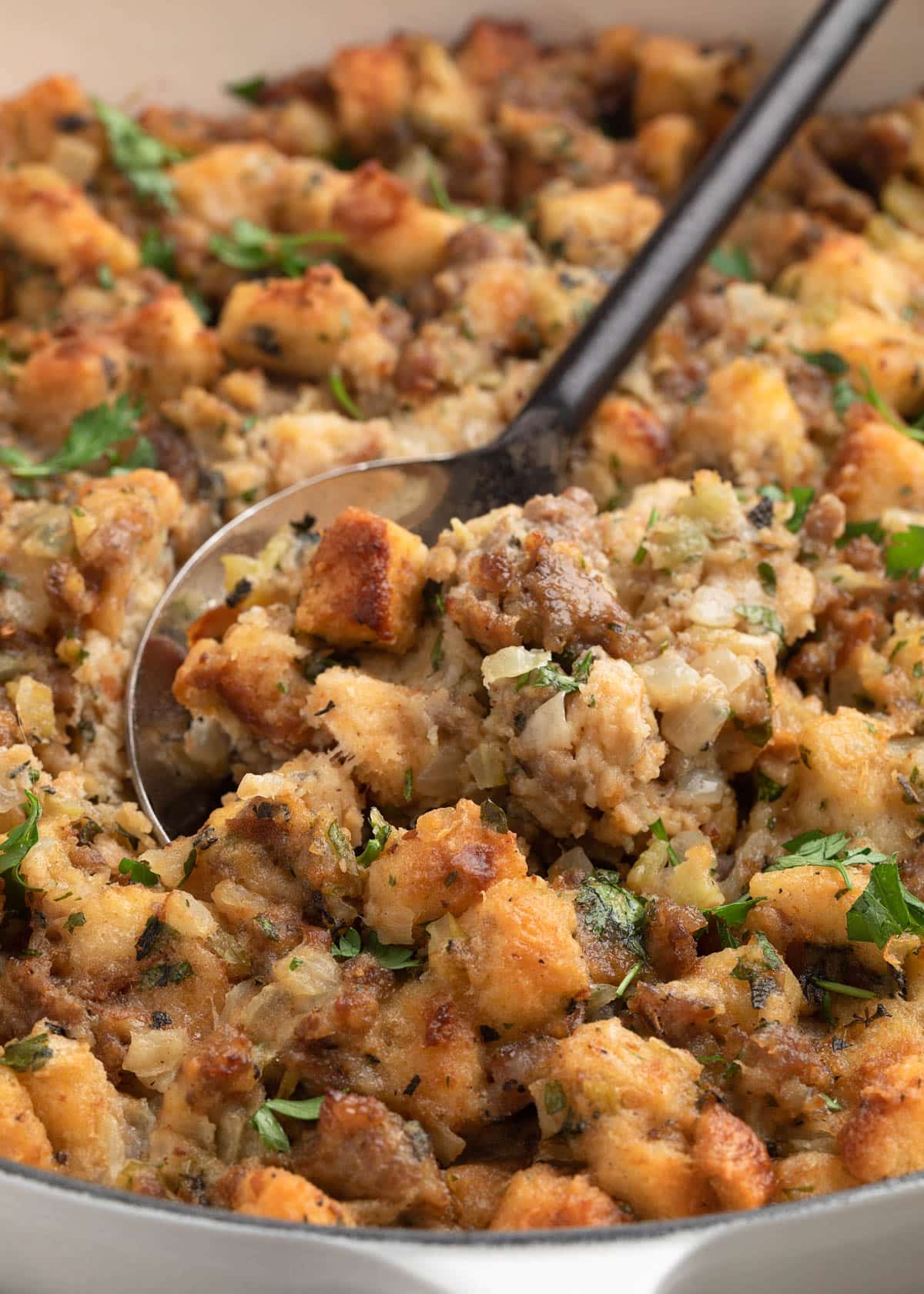
Be sure to scoop all the way to the edges—everyone in my family always goes for the crispy bits first!
Italian Sausage Stuffing fits in at both simple holiday spreads and larger feasts with multiple sides. It’s particularly delicious with a generous drizzle of rich turkey gravy.
Keeping the Stuffing Warm
If you’re not serving your Italian Sausage Stuffing immediately, keep it warm in a 200–250°F oven, covered with foil, or use a covered chafing dish. For the best texture, don’t hold it for more than 30–45 minutes, and make sure the center stays above 140°F for food safety.
If it begins to dry out, a drizzle of warm broth will bring the moisture right back.

Make-Ahead Options
Stuffing is something many of us try to tackle ahead of time, but it’s important to follow food-safety guidelines. The USDA advises against refrigerating fully assembled, unbaked stuffing, even when kept cold, because the mixture can harbor bacteria. (Their article, Stuffing and Food Safety, explains more.)
You can still get a jump on this Italian Sausage Stuffing by prepping a few elements ahead of time:
- Chop the celery and onions 1-2 days before and store them in airtight containers in the fridge. I save chopping the fresh herbs for the day I make the stuffing—they taste the brightest that way.
- Parmesan can be grated a day or two ahead and kept covered in the refrigerator.
- And, as I mentioned earlier, I always prepare the bread croutons a few days before the holiday so they’re completely cooled and ready to go.
If you want the stuffing completely prepped before the holiday, freezing is the safest approach. Assemble the stuffing, spoon it into a buttered freezer-to-oven-safe dish, cover tightly with foil, and freeze for up to 3 months.
To bake from frozen, place the covered dish into a 350°F oven and bake for 1 hour. Increase the temperature to 375°F, uncover, and continue baking for 15–20 minutes, until the top is golden and crisp and the center reaches 165°F.
More Homemade Stuffing (Dressing) Recipes
More Thanksgiving and Holiday Sides
- Buttermilk Sweet Potato Casserole
- Cream Cheese Mashed Potatoes
- Apple Orange Cranberry Sauce
- Haricots Verts With Lemon-Herb Brown Butter
Italian Sausage Stuffing with Parmesan and Herbs
Ingredients
- 1½ pound loaf country white bread , cut into ½–¾-inch cubes (see note 1)
- 10 tablespoons unsalted butter , divided
- 1 pound sweet Italian sausage , bulk or casings removed from links (see note 2)
- 2 cups small diced yellow onion (about 1/4-inch dice)
- 1 cup small diced celery (about 1/4-inch dice) (about 1/4-inch dice)
- 2 tablespoons chopped fresh sage
- 2 teaspoons chopped fresh thyme leaves
- ¼ teaspoon poultry seasoning (see note 3)
- 1 teaspoon Diamond Crystal kosher salt , plus additional to taste (see note 4)
- ½ teaspoon freshly-ground black pepper , plus additional to taste (see note 4)
- ¾ cup freshly-grated Parmigiano Reggiano
- ¼ cup chopped flat leaf parsley , plus extra for garnish
- 2¼ to 3 cups low-sodium turkey stock or chicken broth/stock (see note 5)
- 2 large eggs
Instructions
Make the Croutons
- Preheat oven to 250°F. Spread the bread cubes in a single layer on 2 rimmed half-sheet pans.
- Bake for 50–60 minutes, stirring and rotating the pans halfway through, until the cubes are well-dried with just a hint of toasty color.
- Cool completely at room temperature. You should have approximately 1 pound (12 cups) of croutons.
Cook the Sausage and Vegetables
- Melt 2 tablespoons butter in a large nonstick skillet over medium-high heat. Add the sausage and cook, breaking it into bite-sized crumbles, until browned and cooked through.
- Transfer the sausage to a large mixing bowl with a slotted spoon, leaving the drippings in the pan.
- Add 6 tablespoons of butter to the skillet. When melted, add the celery and onions. Cook over medium heat for 8–10 minutes, until softened but not browned.
- Stir in the sage, thyme, poultry seasoning, 1 teaspoon salt, and 1/2 teaspoon pepper. Cook for 1–2 minutes, until the herbs soften and the mixture is aromatic.
Assemble the Stuffing
- Add the cooled croutons, vegetable mixture (and all the butter from the pan), grated Parmigiano Reggiano, and chopped parsley to the mixing bowl with the sausage. Gently stir to mix everything together.
- Pour 1¾ cups of the stock over the mixture. Toss well and let sit for a few minutes so the bread can begin absorbing the liquid. Taste and adjust the seasoning with salt and pepper as needed (this is your last chance to taste before the eggs are added).
- Whisk the eggs with ½ cup stock. Pour over the stuffing, toss again, and let it stand a few minutes to absorb.
- Check the moisture level by gently squeezing a crouton. It should feel hydrated all the way through, but still hold its shape. Add additional stock as needed, ¼ cup at a time, until the stuffing is evenly moistened. Every loaf of bread absorbs liquid differently.
Bake
- Transfer the mixture to a buttered 3-quart gratin dish or 13×9-inch baking dish, spreading it evenly without packing it down.
- Cut the remaining 2 tablespoons of butter into small pieces and scatter them over the top of the stuffing.
- Cover the pan tightly with foil and bake at 375°F for 30 minutes.
- Remove the foil and bake for 15–20 minutes, until the top is golden and crisp and the center reaches 165°F.
- Let the stuffing stand for 10 minutes before sprinkling the top with a little extra chopped fresh parsley and serving.
Notes
Nutrition Estimate
Nutrition information is automatically calculated, so should only be used as an approximation.
Please note that our recipes have been developed using the US Customary measurement system and have not been tested for high altitude/elevation cooking and baking.
You may also like:
Salads
Pea Salad
Side Dishes
19 Best Thanksgiving Side Dishes
Vegetables
Spinach Pea Salad with Bacon and Sausage

Side Dishes